Shenzhou Machinery - Professional Industrial Centrifuge Machine Manufacturer and Centrifugal Separators Supplier in China
Language
Shenzhou Machinery - Professional Industrial Centrifuge Machine Manufacturer and Centrifugal Separators Supplier in China
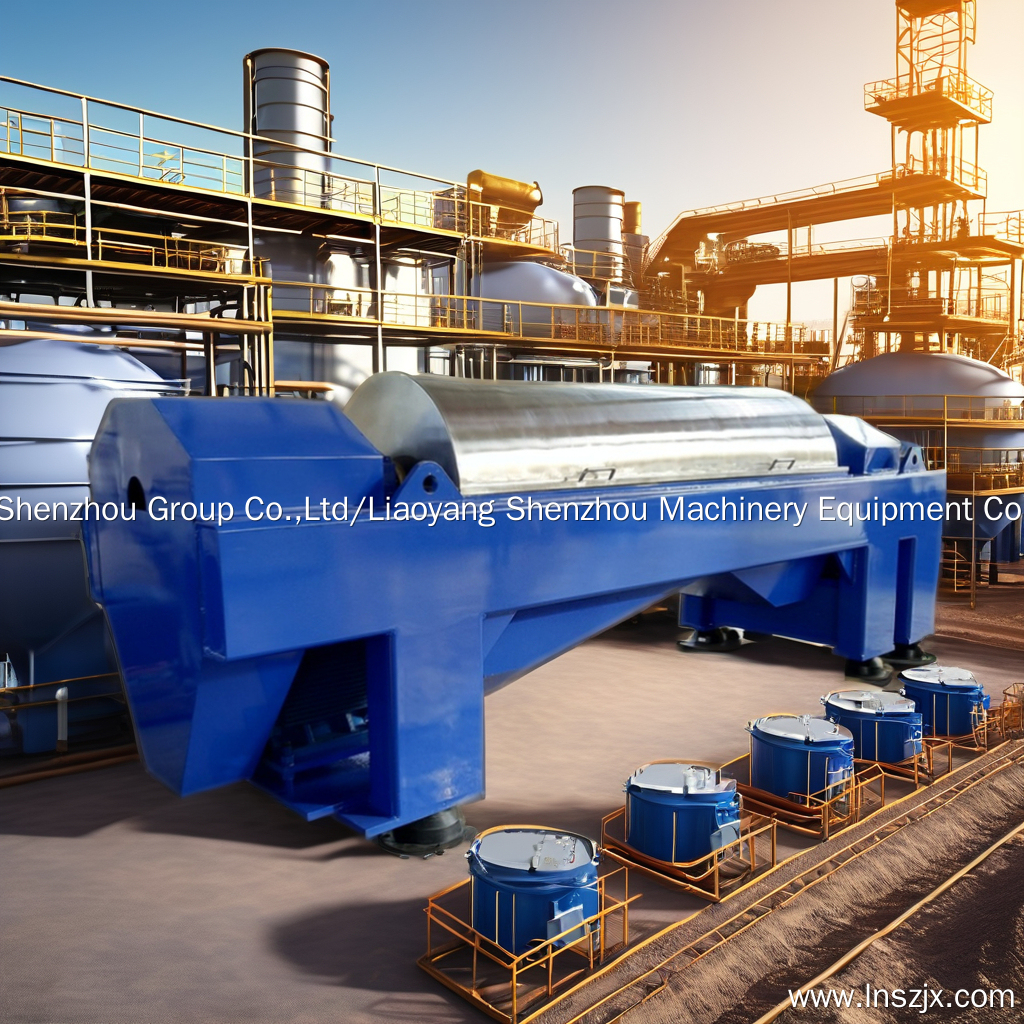
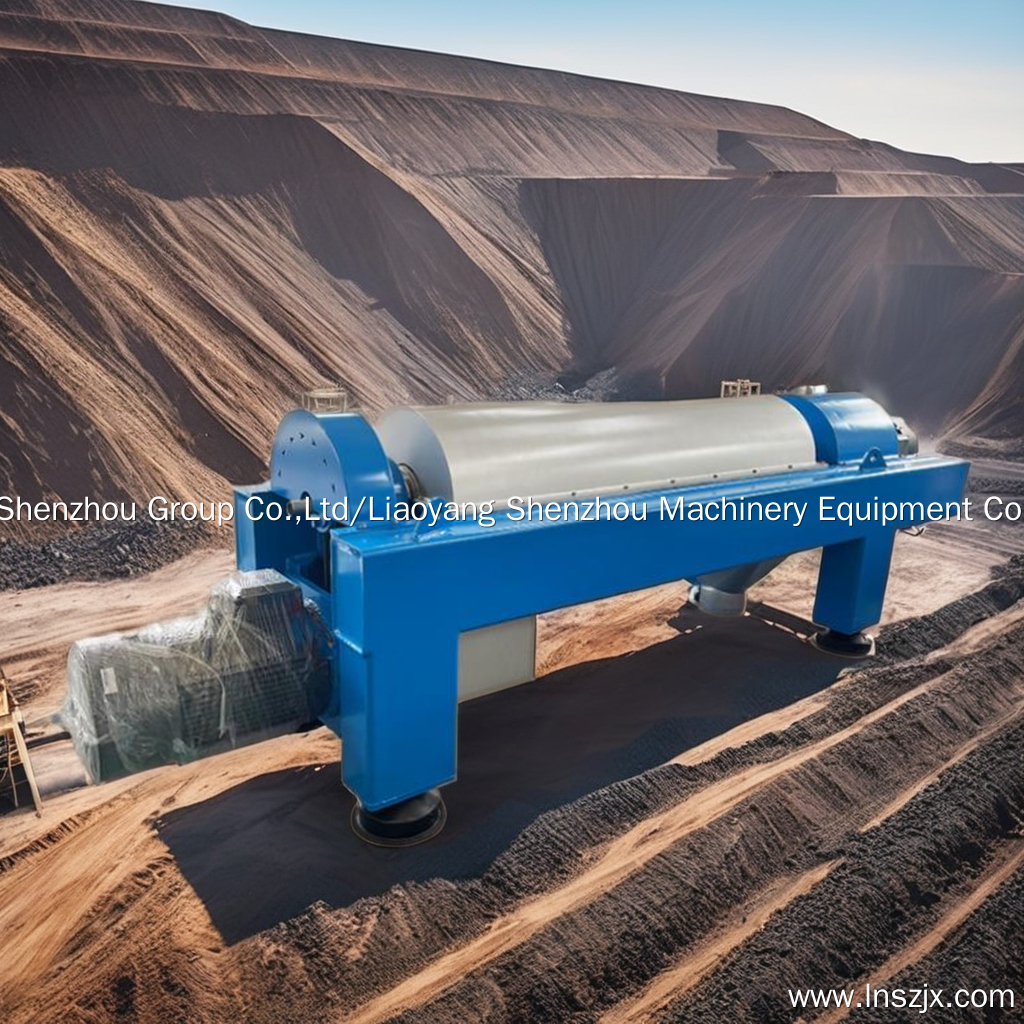
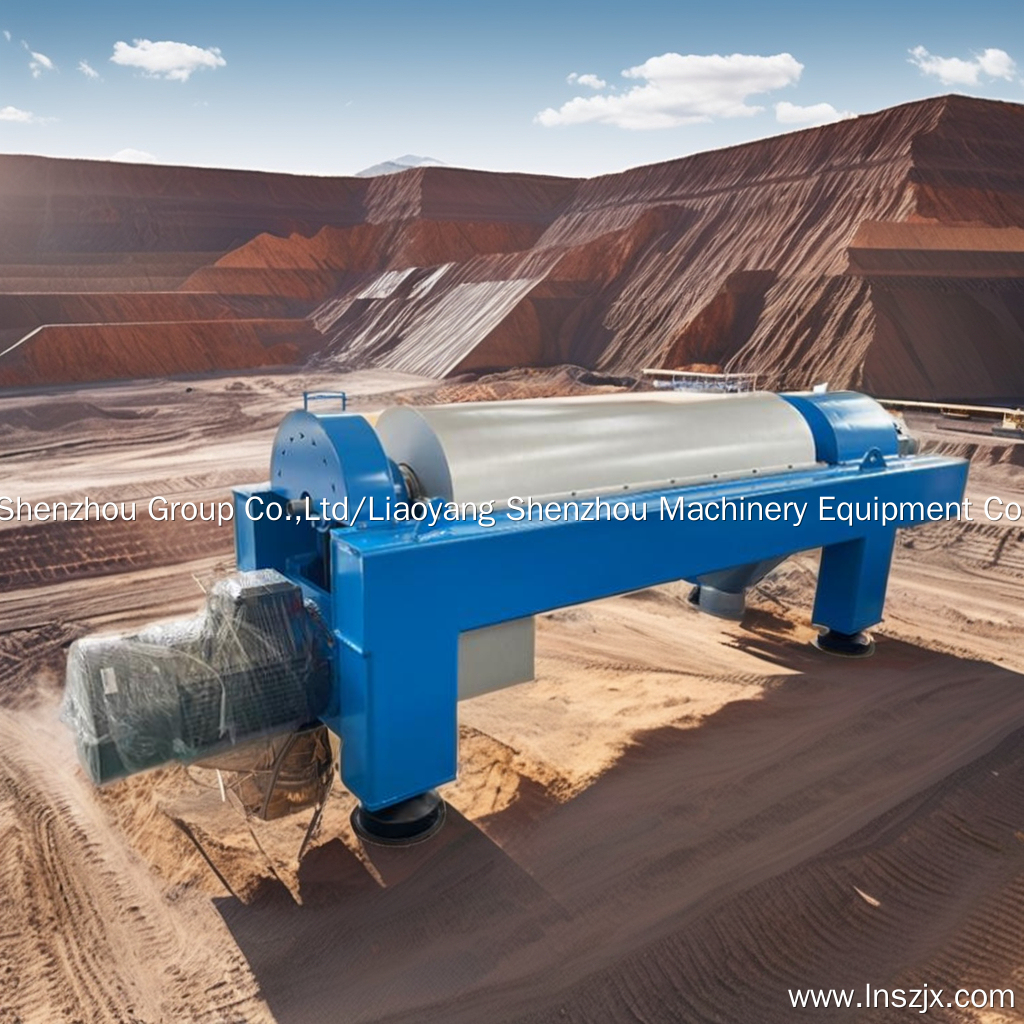
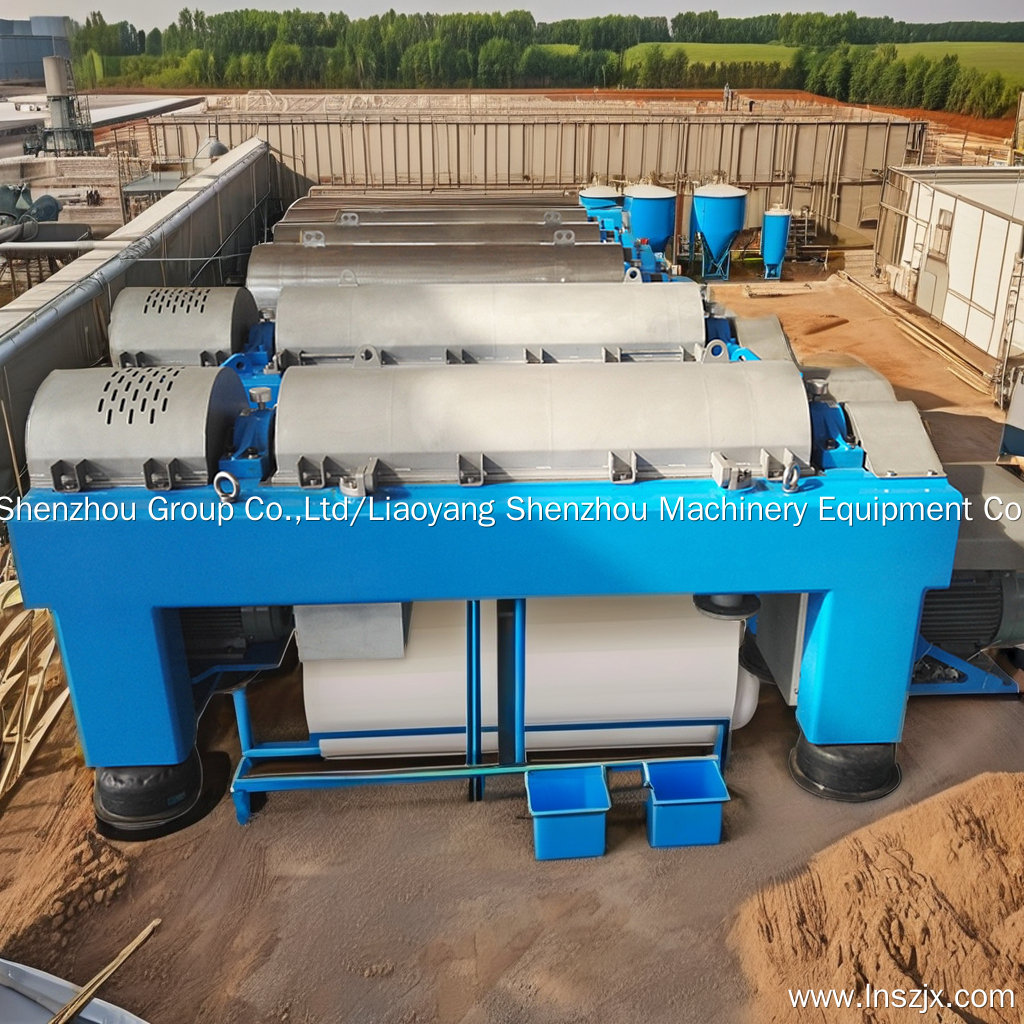
Decanter centrifuges are tools used in wastewater treatment practices to separate liquids from solids. It functions based on centrifugal force, where denser particles are pushed outward against the rotating bowl wall while the lighter liquid part progresses toward the center. This separation method is most effective for wastewater treatment since it can manage huge quantities of slurry containing a combination of liquid and solid particles.
To completely comprehend how a decanter centrifuge works, we must first explain what it does. In numerous industrial projects, solid material frequently combines with liquids, turning mud into sludge and polluting water supplies.
Several of today’s water plants still use old procedures to treat surface or groundwater for domestic use. Besides clean water, a mass volume of sludge solution is an issue. The disadvantages of conventional techniques include:
Contaminating the environment
Unusable for large-scale factories
Too time consuming
The decanter centrifuge uses innovative new technology, which comes with many benefits worth the cost.
Our 2 Phase Centrifuge is designed with advanced technology to efficiently separate liquid-solid mixtures, making it perfect for various industrial applications. With a strong emphasis on quality and durability, our centrifuge promises reliable performance and long-term usability. Its high-speed rotation and precise separation capabilities ensure quick and efficient processing, saving time and resources for our customers.
Our company specializes in providing state-of-the-art liquid-solid separation solutions, including the innovative 2 Phase Centrifuge. With a focus on efficiency and reliability, our centrifuge is designed to meet the demanding needs of various industries, such as food processing, chemical, and wastewater treatment. Our team of experts is dedicated to delivering high-quality products that exceed customer expectations, providing a sustainable solution for optimal production processes. Trust in our company to provide the cutting-edge technology and expertise needed to enhance your liquid-solid separation applications. Partner with us for unmatched quality and performance in the industry.
Our company is a leading provider of industrial separation solutions, specializing in the design and manufacture of high-quality 2 phase centrifuges for efficient liquid-solid separation. With years of experience in the industry, we are committed to delivering products that meet the highest standards of performance and reliability. Our centrifuges are designed to provide unparalleled efficiency and precision in separating liquids and solids, saving our customers time and money. Trust in our company to provide you with innovative solutions that streamline your operations and maximize productivity. Choose us for all your separation needs and experience the difference our products can make.
Decanter centrifuges are tools used in wastewater treatment practices to separate liquids from solids. It functions based on centrifugal force, where denser particles are pushed outward against the rotating bowl wall while the lighter liquid part progresses toward the center. This separation method is most effective for wastewater treatment since it can manage huge quantities of slurry containing a combination of liquid and solid particles.
To completely comprehend how a decanter centrifuge works, we must first explain what it does. In numerous industrial projects, solid material frequently combines with liquids, turning mud into sludge and polluting water supplies.
Several of today’s water plants still use old procedures to treat surface or groundwater for domestic use. Besides clean water, a mass volume of sludge solution is an issue. The disadvantages of conventional techniques include:
Contaminating the environment
Unusable for large-scale factories
Too time consuming
The decanter centrifuge uses innovative new technology, which comes with many benefits worth the cost.
 |  |
What is a Decanter Centrifuge?
A decanter centrifuge is helpful in that it divides liquids and solids, becoming a vital part of:
Gas and oil drilling
Manufacturing
Oil reclamation
Water waste facilities
Dredging
Without a decanter centrifuge, most of these businesses would become so unproductive they could not operate.
There are many types of decanter centrifuges currently used in the industry, the most common ones are horizontal, conveyor, and vertical centrifuges. The value of a decanter centrifuge is based on the concept of gravitational separation.
When it comes to wastewater treatment, this is how a decanter centrifuge functions:
Inlet pipe – Liquid with solid particles in it (slurry) goes through a decanter centrifuge via an inlet pipe.
Increase of velocity – The slurry goes into a high-velocity rotating bowl. As the bowl rotates, centrifugal force makes the heavy, solid particles gravitate to the bowl wall. The solids create a layer while the liquid flows to the bowl’s center.
Emission – The liquid leaves the centrifuge through a separate outlet, prepared for disposal or more treatment. A screw conveyor pushes the solids close to the centrifuge’s conical end. Also known as the scroll, the speed of the conveyor helps in moving the solids to the discharge ports.
How a Decanter Centrifuge Functions
A decanter centrifuge uses the same standards of gravitational force. However, the procedure is accelerated using nonstop rotation. The constant rotation delivers approximately 1000 to 4000 times the usual gravitational force, decreasing the time necessary for separation from hours to seconds.
The idea of rotational separation is like amusement park rides. In these rides, putting yourself at an angle lets you conquer the gravitational forces generated by rotation. A decanter centrifuge is basically a bowl tube that spins at a very high speed. The bowl tube has an internal conveyor that goes in the same direction but at another velocity.
Advantages of Decanter Centrifuges
Adaptability – A decanter centrifuge can be modified to manage various types of slurry and different concentrations of solids, rendering them adaptable in many industrial applications.
Little to no impact on the environment – By dividing solids from the wastewater, a decanter centrifuge helps in decreasing environmental contamination, guaranteeing that treated water going back into the environment satisfies regulatory guidelines.
Nonstop operation – A decanter centrifuge can work nonstop, giving a dependable and steady process of dividing liquids from solids.
Cost-efficiency- While the first investment can be substantial, the continuous effectiveness of a decanter centrifuge frequently leads to lifelong savings when it comes to disposal and labor costs.
High-efficiency – Decanter centrifuges can handle huge volumes of slurry and have massive separation efficiency, guaranteeing the complete elimination of solids from the liquid.
Automation and control systems- Newer decanter centrifuges typically have automation and control systems, ensuring easy monitoring and accurate adjustments during the separation procedure.
In summary, a decanter centrifuge is a vital tool in wastewater treatment, providing adjustable, effective solutions for dividing liquids from solids. Their applications among several industries emphasize their significance in sustainable practices and environmental safety.
 |  |
Advantages of a Decanter Centrifuge with Other Machines
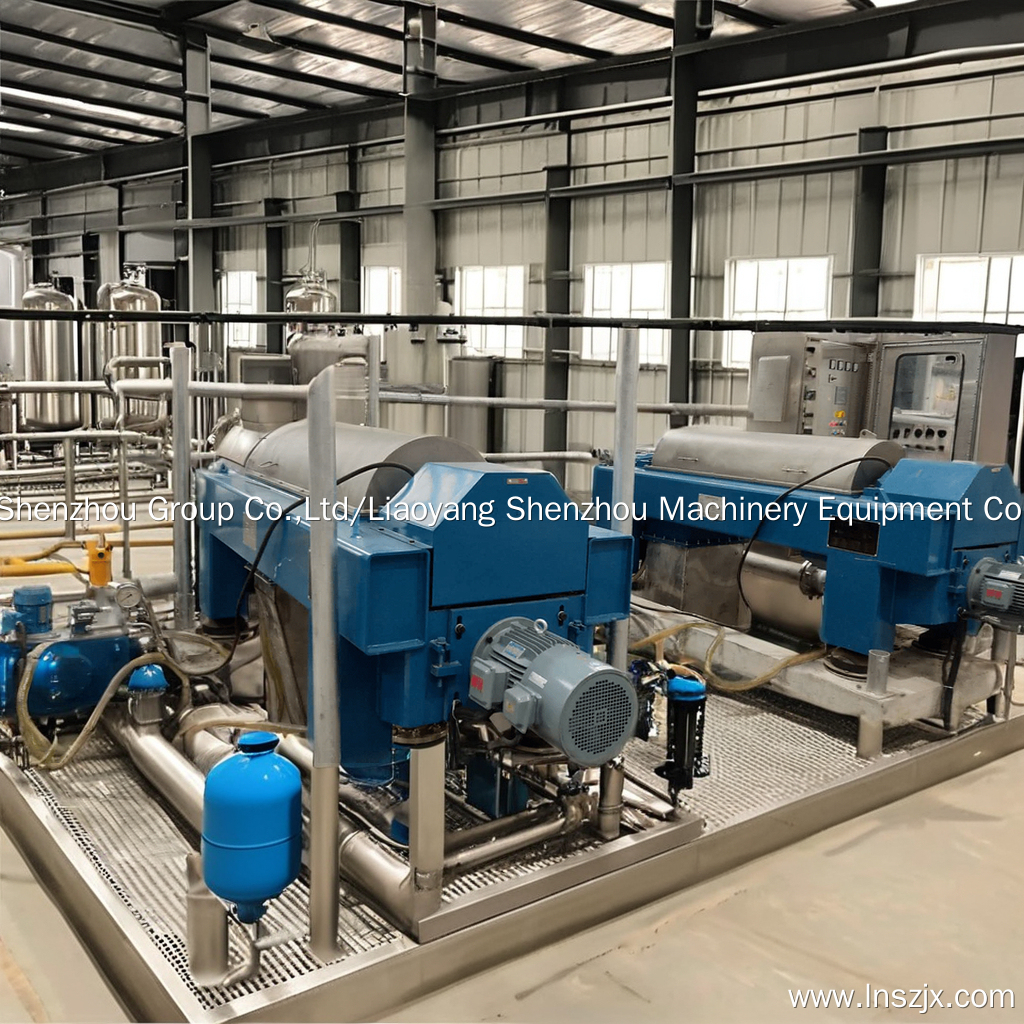
Decanter centrifuge water treatment can work uninterruptedly and automatically controlled. It does not need to stop between pressing batches like plate frame machines. This aids in enhancing productivity, saving energy, and decreasing operating costs.
Self-contained, compact design, decreasing the amount of installation space needed compared with other viable processes. Stainless steel material makes it long-lasting.
Saves water and is simple to clean.
The decanter centrifuge treats juices of several sludges, including those having metals and chemicals. Pressed sludge has stability and high dryness.
A decanter centrifuge has a clean appearance and little to no odor issues.
A decanter centrifuge is simple to install and quick to start up and shut down.
The tool can function with a greater throughput capacity than smaller machines. This also decreases the number of units needed.
The device is easy to optimize and operate as it has a few key variables and dependable feedback information.
Since a decanter centrifuge has decreased labor costs compared to other processes, it necessitates low operator attention and continuous maintenance.
Compared to some other processes like the belt filter process, the decanter centrifuge has a greater level of performance and flexibility.
The decanter centrifuge is versatile as various lengths of the cylindrical bowl section and the cone angle can be chosen for various applications. Additionally, the system can be pre-programmed with different design curves to forecast the sludge type, while some competitive processes, like a belt filter press, can’t alter the belt type to function for various sludge types. Its flexibility allows the tool to have numerous functions like dewatering or operating for thickening.
Wastewater Treatment Applications
Municipal Wastewater Treatment – A decanter centrifuge is used in municipal wastewater treatment plants to divide sludge from the sewer into solids and liquid components. This division is critical before disposal or further treatment of the sludge.
Industrial Wastewater Treatment – Industries like chemicals, pharmaceuticals, and food and beverage use decanter centrifuges for wastewater treatment. These industries usually generate wastewater with high solid content, making decanter centrifuges instrumental in the separation procedure.
Oily Wastewater Treatment – A decanter centrifuge is efficient in splitting oil and other substances from oily wastewater, rendering them important in the oil, automotive, metalworking, and gas industries.
Dewatering – A decanter centrifuge is also used for dewatering. It eliminates the water from sludge, simplifying and decreasing the cost of incinerating or disposing of solid waste. Previously, a sludge dewatering machine has been used but is generally obsolete and archaic (like belt presses and plate presses).
Recurrent breakdowns and blockages interrupt the function of the entire plant. It is not appropriate for the production expansion plan to satisfy the rising demand for clean water for residents. That’s when a decanter centrifuge comes into the picture.
Choosing the Right Decanter Centrifuge for Wastewater Treatment
When determining which decanter centrifuge is right for you, you must consider several factors.
Application – Logically, the most vital concern is how you plan to use the centrifuge. Are you concerned with separating water and oil? You might need a centrifuge mostly for dewatering sludge. You should also consider if you need wastewater filtration.
A decanter centrifuge has a host of applications, even in addition to an industrial environment. Therefore, you must know precisely what you want to use the centrifuge for and buy suitably.
Workload Size – Regardless of the type of decanter centrifuge you use, you can pick between manual or automatic functions. This is vital when evaluating your workload since numerous decanter centrifugal functions need to be uninterrupted. For this type of application, you need an automatic decanter centrifuge that operates on electricity. The advantage is that several of them are self-cleaning, eliminating solids or liquids without human involvement.
For smaller applications, you might be able to use a manual decanter centrifuge. However, these types aren’t typical in current industrial settings.
 |  |

Shenzhou Group Co.,Ltd/Liaoyang Shenzhou Machinery Equipment Co.,Ltd always considers communicating through phone calls or video chat the most time-saving yet convenient way, so we welcome your call for asking for the detailed factory address. Or we've displayed our e-mail address on the website, you are free to write an E-mail to us about the factory address.
In China, ordinary working time is 40 hours for employees who work full time. In Shenzhou Group Co.,Ltd/Liaoyang Shenzhou Machinery Equipment Co.,Ltd, most employees work abiding by this kind of rule. During their duty time, each of them devotes their full concentration to their work so as to provide customers with the highest-quality Peeler centrifuge and an unforgettable experience of partnering with us.
To draw in more users and consumers, industry innovators are continually developing its qualities for a larger range of application scenarios. Additionally, it can be customized for clients and has a reasonable design, all of which help grow the customer base and loyalty.
Yes, if asked, we will supply relevant technical details regarding Shenzhou. Basic facts about the products, such as their primary materials, specs, forms, and primary functions, are readily available on our official website.
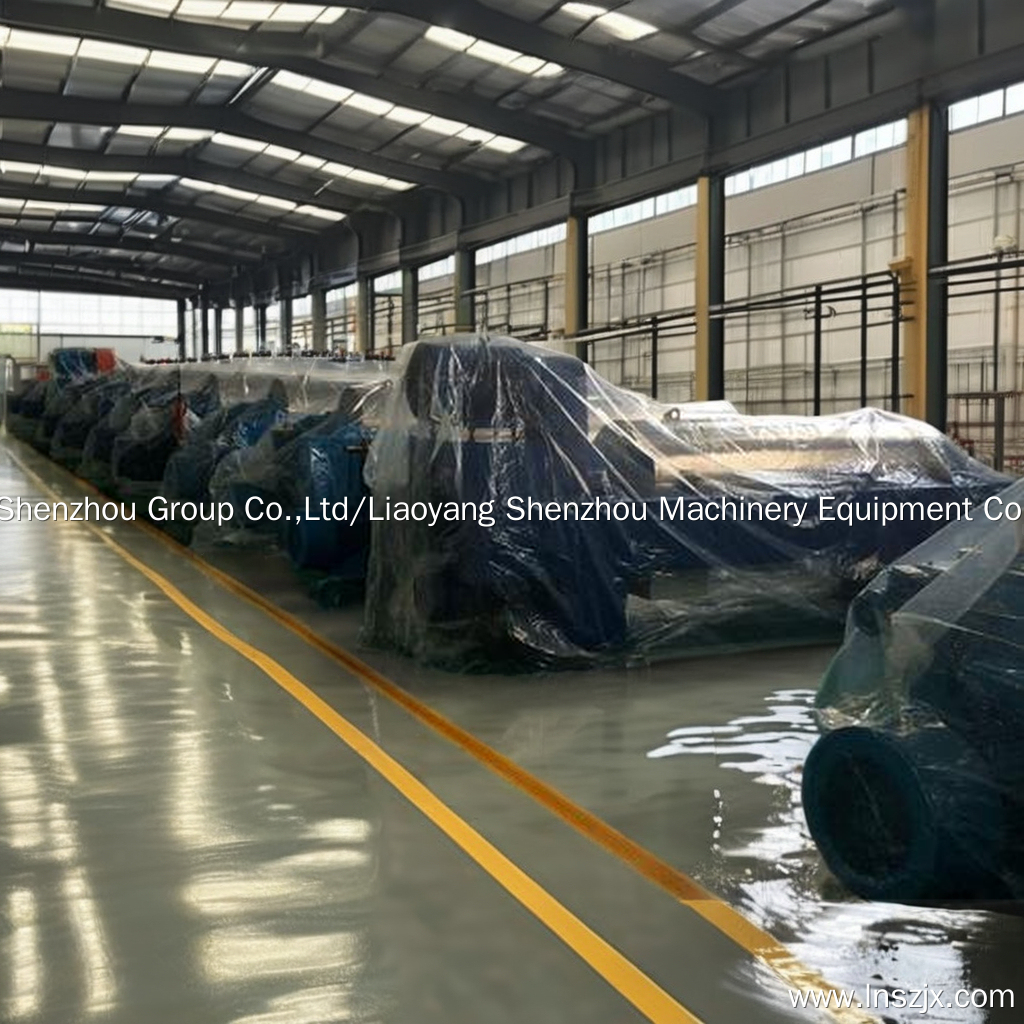
The application of the QC process is crucial for the quality of the final product, and every organization needs a strong QC department. 2 phase centrifuge QC department is committed to continual quality improvement and focuses on ISO Standards and quality assurance procedures. In these circumstances, the procedure may go more easily, effectively, and precisely. Our excellent certification ratio is a result of their dedication.
In essence, a long-standing 2 phase centrifuge organization runs on rational and scientific management techniques that were developed by smart and exceptional leaders. The leadership and organizational structures both guarantee that the business will offer competent and high-quality customer service.
Copyright © 2025 Shenzhou Group Co.,Ltd/Liaoyang Shenzhou Machinery Equipment Co.,Ltd - www.lnszjx.com All Rights Reserved.辽ICP备18010813号-1