What scenarios are different types of centrifuges suitable for?
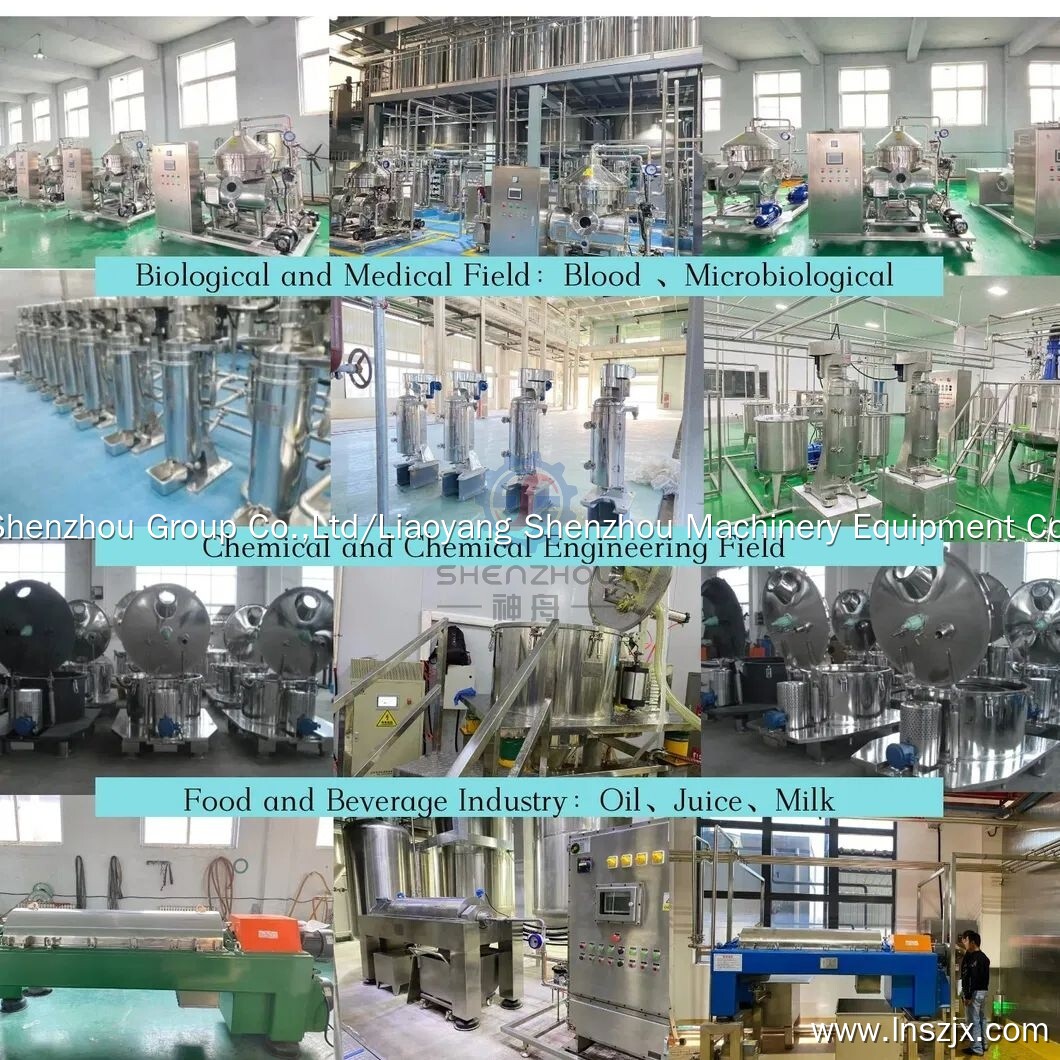
Different types of centrifuges are suitable for diverse scenarios due to differences in rotational speed, structure, and separation principles. Below is a detailed explanation of common centrifuge types and their typical application scenarios:
### **1. Application Scenarios of Centrifuges Classified by Rotational Speed**
#### 1. **Low-Speed Centrifuge**
- **Speed**: <3,000 rpm
- **Core Scenarios**:
- **Medical Testing**: Separation of blood samples (e.g., serum/plasma extraction), urine sediment analysis.
- **Biology Labs**: Collection of large-particle microorganisms such as yeast and bacteria (e.g., centrifugation of *E. coli*).
- **Food Industry**: Juice clarification (separating pulp residue), dairy processing (e.g., whey separation in cheese production).
- **Characteristics**: Simple operation, low noise, suitable for separating larger particles or high-concentration samples.
#### 2. **Medium-Speed Centrifuge**
- **Speed**: 3,000–15,000 rpm
- **Core Scenarios**:
- **Biological Engineering**: Separation of cell culture fluids (e.g., collection of animal and plant cells).
- **Chemical Industry**: Solid-liquid separation of pigments and dyes (e.g., impurity removal in paint production).
- **Pharmaceutical Industry**: Primary separation of antibiotic fermentation broth (e.g., microbial recovery in penicillin production).
- **Characteristics**: Balances efficiency and sample protection, suitable for biological or industrial samples with medium particle sizes.
#### 3. **High-Speed Centrifuge**
- **Speed**: 15,000–50,000 rpm
- **Core Scenarios**:
- **Molecular Biology**: Plasmid DNA extraction, protein purification (e.g., separating cell organelles via differential centrifugation).
- **Virus Research**: Separation and concentration of virus particles (requires cooling function to prevent sample denaturation).
- **Fine Chemicals**: Fractionation of nanomaterial dispersions (e.g., separation of carbon nanotubes and graphene).
- **Characteristics**: High speed generates strong centrifugal force, suitable for separating micron-to-submicron particles, often equipped with cooling systems.
#### 4. **Ultracentrifuge**
- **Speed**: >50,000 rpm (up to 1,000,000 rpm)
- **Core Scenarios**:
- **Biomedical Research**: Density gradient centrifugation of DNA/RNA (e.g., separating nucleic acids of different molecular weights via CsCl gradients), viral capsid structure analysis.
- **Materials Science**: Particle size distribution measurement of colloidal particles (e.g., liposomes, nanoemulsions).
- **Polymer Research**: Analysis of polymer molecular weight distribution (via sedimentation velocity or sedimentation equilibrium methods).
- **Characteristics**: Requires a vacuum environment to reduce heat and resistance, commonly used for molecular or nanoscale separation, with extremely high equipment costs.
### **2. Application Scenarios of Centrifuges Classified by Separation Principle**
#### 1. **Filter Centrifuge**
- **Principle**: Centrifugal force drives liquid through filter media, retaining solid particles.
- **Typical Equipment**: Three-foot centrifuges, scraper discharge centrifuges.
- **Application Scenarios**:
- **Food Processing**: Separation of sucrose crystals, starch dehydration (e.g., corn starch production).
- **Chemical Industry**: Solid-liquid separation of fertilizers (e.g., urea, ammonium chloride), filtration of resin particles.
- **Mining Industry**: Tailings dewatering in mineral processing (e.g., slag treatment in copper and gold mines).
- **Suitable Materials**: Suspensions with larger particles (>5μm), high solid content (>10%), and good flowability.
#### 2. **Sedimentation Centrifuge**
- **Principle**: Uses centrifugal force to sediment and layer components of different densities.
- **Typical Equipment**:
- **Tubular Bowl Centrifuge**:
- **Scenarios**: Biopharmaceuticals (e.g., virus particle separation in vaccine production), vegetable oil degumming (separating phospholipids), blood component separation (e.g., platelet extraction).
- **Characteristics**: Extremely high speed (15,000–50,000 rpm), suitable for separating tiny particles or emulsions.
- **Disc Centrifuge**:
- **Scenarios**: Dairy industry (milk dregs removal, cream separation), petroleum refining (crude oil dehydration and desalting), biodiesel production (separating glycerol and methyl esters).
- **Characteristics**: Multi-disc structure accelerates sedimentation, suitable for liquid-liquid or liquid-solid-liquid three-phase separation.
- **Decanter Centrifuge**:
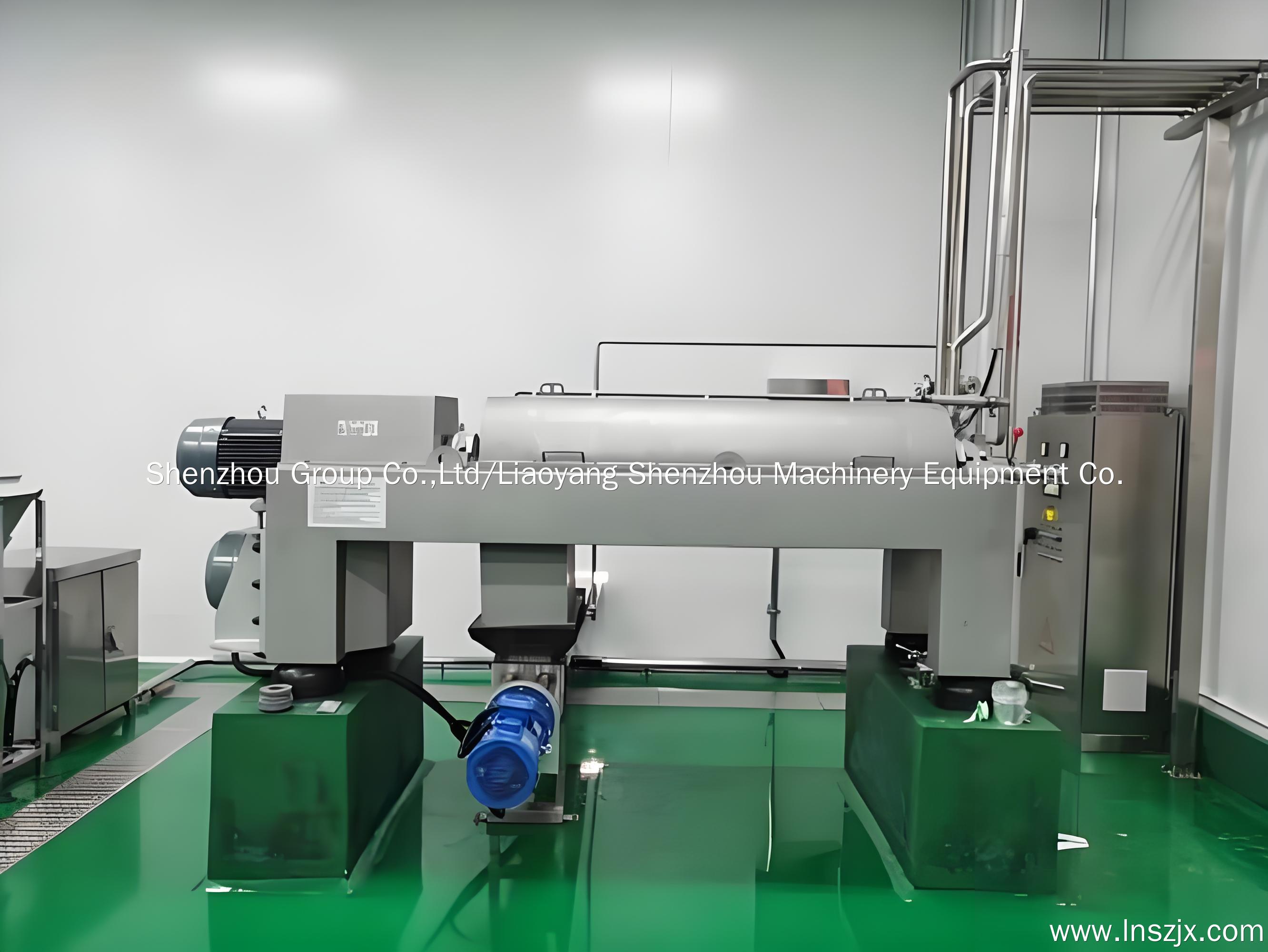
- **Scenarios**: Industrial wastewater treatment (sludge dewatering), food processing (juice dregs removal, animal fat refining), chemical waste treatment (e.g., desalting pesticide wastewater).
- **Characteristics**: Continuous operation, automatic slag discharge via screw pusher, suitable for large-scale solid-liquid separation.
### **3. Application Scenarios of Centrifuges Classified by Operation Mode**
#### 1. **Batch Centrifuge**
- **Operation Features**: Batch feeding, separation, and discharging, requiring manual or semi-automated control.
- **Typical Equipment**: Three-foot centrifuges, piston pusher centrifuges.
- **Application Scenarios**:
- **Laboratories and Small-Scale Production**: Pharmaceutical R&D (small-batch drug crystal separation), fine chemicals (multi-variety, small-batch raw material processing).
- **Special Material Handling**: Separation of deformable particles (e.g., yeast cells) requiring protection from mechanical damage.
#### 2. **Continuous Centrifuge**
- **Operation Features**: Continuous material input and discharge, high automation.
- **Typical Equipment**: Decanters, disc separators, spiral discharge filter centrifuges.
- **Application Scenarios**:
- **Large-Scale Industrial Production**: Food and beverage (e.g., beer clarification, continuous starch dehydration), environmental protection (continuous sludge dewatering in wastewater treatment plants).
- **High-Viscosity Material Handling**: Continuous separation of chemical slurries (e.g., polymer slurries) requiring high throughput.
### **4. Typical Scenarios for Special-Purpose Centrifuges**
#### 1. **Refrigerated Centrifuge**
- **Core Function**: Maintains low temperatures (typically 4–20°C) to prevent biological sample denaturation.
- **Application Scenarios**:
- **Molecular Biology Experiments**: Separation of heat-sensitive biomacromolecules such as enzyme solutions and antibodies.
- **Blood Banks and Hospitals**: Low-temperature separation of blood components (e.g., cryopreservation centrifugation of platelets and plasma).
#### 2. **Explosion-Proof Centrifuge**
- **Design Features**: Explosion-proof motors and control systems for flammable and explosive environments.
- **Application Scenarios**:
- **Petrochemical Industry**: Solvent recovery (e.g., separation of acetone and ethanol), wastewater treatment containing volatile organic compounds (VOCs).
- **Hazardous Materials Production**: Separation of explosive raw materials (e.g., nitrocellulose suspensions).
#### 3. **Supercritical Fluid Centrifuge**
- **Principle**: Combines supercritical fluids (e.g., CO₂) with centrifugal force to separate heat-sensitive materials.
- **Application Scenarios**:
- **Natural Product Extraction**: Low-temperature separation of plant essential oils (e.g., rose and lavender oils) to preserve active components.
- **Food Industry**: Decaffeinated coffee production (centrifugal separation after supercritical CO₂ extraction).
#### 4. **Aseptic Centrifuge**
- **Design Features**: Fully enclosed aseptic structure, supporting in-line cleaning (CIP) and sterilization (SIP).
- **Application Scenarios**:
- **Biopharmaceuticals**: Aseptic separation and purification of vaccines (e.g., COVID-19 vaccines) and monoclonal antibodies.
- **Aseptic Dairy Processing**: Aseptic dregs removal in pasteurized milk to ensure microbial safety.
### **5. Core Logic and Cases for Model Selection**
#### 1. **Selection by Material Properties**
- **Particle Size**:
- Large particles (>5μm): Prioritize filter centrifuges (e.g., three-foot centrifuges).
- Fine particles (<5μm) or emulsions: Choose sedimentation centrifuges (e.g., disc or tubular centrifuges).
- **Thermal Sensitivity**:
- Biological samples: Select refrigerated or ultracentrifuges (with cooling functions).
- **Corrosiveness**:
- Strong acid/alkali systems: Require stainless steel or special coating materials (e.g., titanium alloy) for centrifuges (e.g., chemical industry).
#### 2. **Typical Cases**:
- **Wastewater Treatment Plants**: Require continuous sludge processing; choose decanter sedimentation centrifuges (high-efficiency slag discharge, suitable for sludge with 3%–8% solid content).
- **Biotechnology Companies**: Separating recombinant proteins (e.g., insulin); choose high-speed refrigerated centrifuges (low-temperature environment preserves protein activity).
- **Petroleum Refineries**: Crude oil dehydration and desalting; choose disc centrifuges (liquid-liquid-solid three-phase separation, high throughput).
As shown in the above classifications, selecting a centrifuge requires comprehensive consideration of material properties, separation objectives, production scale, and safety requirements to achieve efficient separation by targeting the appropriate equipment type.