


Table of Contents
Application of Decanter Centrifuges in Lactic Acid Bacteria Separation
2025-11-08
×
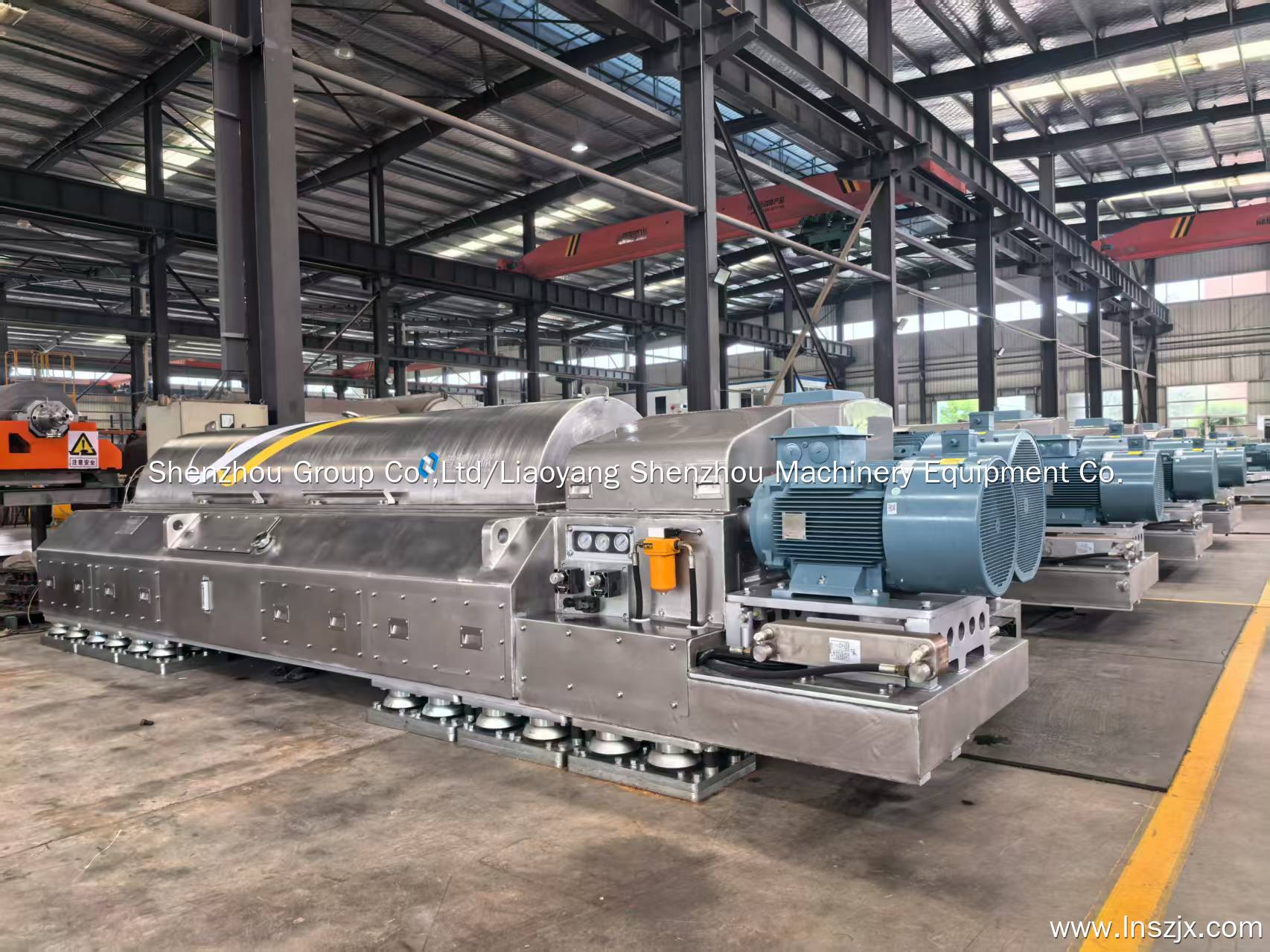
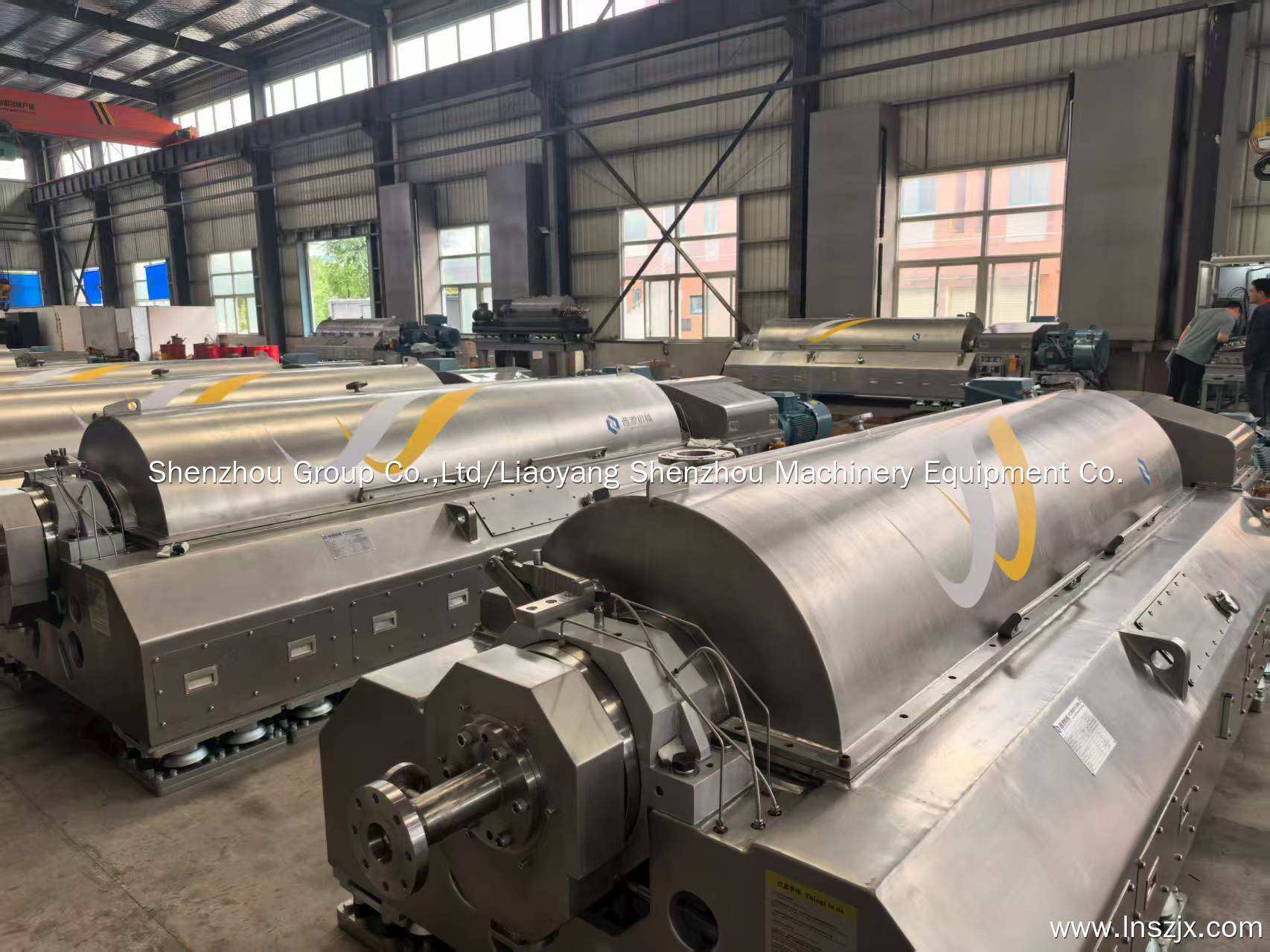
A decanter centrifuge is mainly composed of a rotating drum and a screw conveyor, which rotate in the same direction with a small speed difference. After the lactic acid bacteria fermentation broth enters the centrifuge, under the action of centrifugal force generated by high-speed rotation, lactic acid bacteria cells—due to their higher density—are thrown to the inner wall of the rotating drum, forming solid particles (bacterial sludge). Meanwhile, the liquid (fermentation supernatant) remains in the center of the rotating drum and is discharged through an overflow port. The screw conveyor pushes the bacterial sludge from the small end of the rotating drum to the slag discharge port at the large end, completing the solid-liquid separation process.
Key parameters in the separation process include drum speed, differential speed, feed flow rate, and separation factor. The drum speed is usually 3000-6000 rpm, and the separation factor can reach 1500-4000g, which can effectively separate lactic acid bacteria cells with a diameter of only 1-5 micrometers. The differential speed is adjusted by a planetary gear differential, generally accounting for 0.2%-2% of the drum speed. It can control the discharge speed of bacterial sludge to ensure separation efficiency and processing effectiveness.
II. Application Scenarios
1. Fermentation Broth Pretreatment
After the fermentation of lactic acid bacteria, the fermentation broth contains a large number of lactic acid bacteria cells, unfermented substrates, metabolites, and a small amount of impurities. Decanter centrifuges can be used as pretreatment equipment to quickly separate most lactic acid bacteria cells, reducing the solid content in the fermentation broth from 1%-5% to below 0.1%, thereby reducing the load for subsequent processes such as filtration and purification. For example, in yogurt production, the fermented yogurt broth treated by a decanter centrifuge can remove part of the whey and impurities, improving the thickness and stability of the yogurt.
2. Bacterial Concentration
In the production of lactic acid bacteria preparations (such as probiotic powders and lactic acid bacteria capsules), it is necessary to concentrate the lactic acid bacteria cells in the fermentation broth to increase the bacterial concentration. Decanter centrifuges can concentrate the lactic acid bacteria fermentation broth by 10-50 times, making the lactic acid bacteria content in the bacterial sludge reach 10¹⁰-10¹² CFU/g. The concentrated bacterial sludge can be directly freeze-dried or further processed through washing, refining, and other processes to improve purity.
3. Refining and Washing
To remove impurities, metabolites, and medium components on the surface of lactic acid bacteria cells, the concentrated bacterial sludge needs to be washed. Decanter centrifuges can add washing solutions (such as sterile water and normal saline) during the separation process. Through countercurrent washing, impurities in the bacterial sludge are removed, and the purity of lactic acid bacteria is improved. For example, in the production of high-purity lactic acid bacteria powder, multiple washings using a decanter centrifuge can make the purity of lactic acid bacteria reach more than 95%.
III. Advantages
1. Continuous Operation and Large Processing Capacity
Decanter centrifuges can achieve continuous feeding, separation, and slag discharge without stopping for slag unloading. Their processing capacity can reach 1-100 m³/h, making them suitable for large-scale industrial production. In contrast, traditional centrifugal separation equipment (such as tubular centrifuges) requires intermittent operation, has a small processing capacity, and is difficult to meet the needs of large-scale production.
2. High Separation Efficiency and High Bacterial Recovery Rate
Decanter centrifuges have a high separation factor, which can effectively separate tiny lactic acid bacteria cells, with a bacterial recovery rate of 90%-99%. At the same time, the separation effect of the equipment is stable and not affected by factors such as feed concentration and temperature, ensuring the consistency of product quality.
3. High Degree of Automation and Easy Operation
Modern decanter centrifuges are usually equipped with a PLC control system, which can realize automatic adjustment and monitoring of parameters such as rotation speed, differential speed, and feed flow rate. Operators only need to make simple settings through the touch screen to complete the entire separation process, reducing manual intervention and improving production efficiency and operational safety.
4. Strong Adaptability and Wide Application Range
Decanter centrifuges can adjust parameters such as drum speed, differential speed, and feed flow rate according to the characteristics of different lactic acid bacteria fermentation broths (such as viscosity, solid content, and bacterial size) to achieve the best separation effect. At the same time, the equipment can also be used for the separation of other microorganisms (such as yeast and Escherichia coli), with a wide application range.
IV. Precautions
1. Equipment Selection
Select an appropriate decanter centrifuge model based on the characteristics of the lactic acid bacteria fermentation broth and production requirements. The main factors to consider include processing capacity, separation factor, differential speed adjustment range, and drum material. For example, for high-viscosity fermentation broths, a centrifuge with a larger drum diameter and higher rotation speed should be selected; for highly corrosive fermentation broths, a drum made of stainless steel should be chosen.
2. Optimization of Operating Parameters
When using a decanter centrifuge for lactic acid bacteria separation, it is necessary to optimize the operating parameters to ensure separation efficiency and bacterial recovery rate. For example, an excessively high drum speed may cause the rupture of lactic acid bacteria cells, affecting product quality; an excessively low speed may fail to effectively separate lactic acid bacteria cells. The differential speed and feed flow rate also need to be adjusted according to actual conditions to avoid problems such as bacterial sludge clogging the slag discharge port or poor separation effect.
3. Equipment Maintenance and Cleaning
Regular maintenance and cleaning of decanter centrifuges are crucial to ensure normal equipment operation and product quality. The main maintenance tasks include checking the wear of components such as the drum, screw conveyor, and bearings, and replacing damaged components in a timely manner; cleaning residual bacterial sludge and impurities on the inner wall of the drum and the blades of the screw conveyor to prevent bacterial growth and equipment corrosion.
4. Protection of Bacterial Activity
Lactic acid bacteria are microorganisms sensitive to the environment. During the separation process, they are easily affected by factors such as temperature, pressure, and shear force, leading to a decrease in bacterial activity. Therefore, when using a decanter centrifuge for lactic acid bacteria separation, appropriate measures need to be taken to protect bacterial activity. For example, control the temperature of the fermentation broth at 4-10°C to reduce the damage of shear force to the bacteria; use a mild washing solution during the washing process to avoid using high-concentration salt solutions or organic solvents.
V. Development Trends
1. Intelligence and Automation
With the development of Industry 4.0, decanter centrifuges will become more intelligent and automated. Future decanter centrifuges will be equipped with more advanced sensors and control systems, which can real-time monitor the characteristics of the fermentation broth (such as viscosity, solid content, and bacterial concentration) and automatically adjust operating parameters to achieve the best separation effect. At the same time, the equipment will also be connected to other equipment on the production line (such as fermentation tanks, filters, and dryers) to realize automatic control and management of the production process.
2. High Efficiency and Energy Saving
To improve production efficiency and reduce energy consumption, decanter centrifuges will develop towards higher efficiency and energy saving. For example, the adoption of new drum structures and materials can increase the separation factor and drum speed, thereby improving separation efficiency; the use of variable-frequency motors and energy-saving control systems can reduce the energy consumption of the equipment.
3. Multifunctionalization
Future decanter centrifuges will not only be used for solid-liquid separation but also integrate more functions, such as bacterial washing, refining, and drying. For example, setting up washing and drying zones inside the centrifuge to realize the integration of separation, washing, and drying of lactic acid bacteria, reducing production links and equipment investment.
4. Green and Environmental Protection
With the improvement of environmental awareness, decanter centrifuges will pay more attention to green and environmental protection. For example, the use of environmentally friendly lubricants and sealing materials can reduce environmental pollution; controlling the noise and vibration generated during equipment operation can improve the working environment.
In conclusion, decanter centrifuges have important application value and broad development prospects in the field of lactic acid bacteria separation. With the continuous advancement and innovation of technology, decanter centrifuges will continuously improve separation efficiency, reduce energy consumption, and enhance the degree of automation, providing more reliable and efficient technical support for the industrial production of lactic acid bacteria.
 |  |
ReviewsNumber of comments: {{ page.total }}
I want to comment?
{{item.nickname ? (item.nickname.slice(0, 2) + '*****') : item.source === 1 ? 'mall buyer' : '--'}}
{{item.comment_time}}
Review in the {{item.country}}
Reviews
Merchant
{{replyItem.nickname ? (replyItem.nickname.slice(0, 2) + '*****') : replyItem.source === 1 ? 'mall buyer' : '--'}}
{{replyItem.parent_nickname ? (replyItem.parent_nickname.slice(0, 2) + '*****') : '--'}}
{{replyItem.is_merchant_reply === 1 ? replyItem.reply_time : replyItem.comment_time}}
Review in the {{replyItem.country}}
Reviews

No customer reviews
Recommended for you
Leave A Message
Welcome all who care engaged in the separation and filtration to work with us,and we are also looking for the qualified world wide agents to provide better service and deep marketing.
Copyright © 2026 Shenzhou Machinery is a core subsidiary of Shenzhou Group | Sitemap