Shenzhou Machinery - Professional Industrial Centrifuge Machine Manufacturer and Centrifugal Separators Supplier in China
Language
Shenzhou Machinery - Professional Industrial Centrifuge Machine Manufacturer and Centrifugal Separators Supplier in China
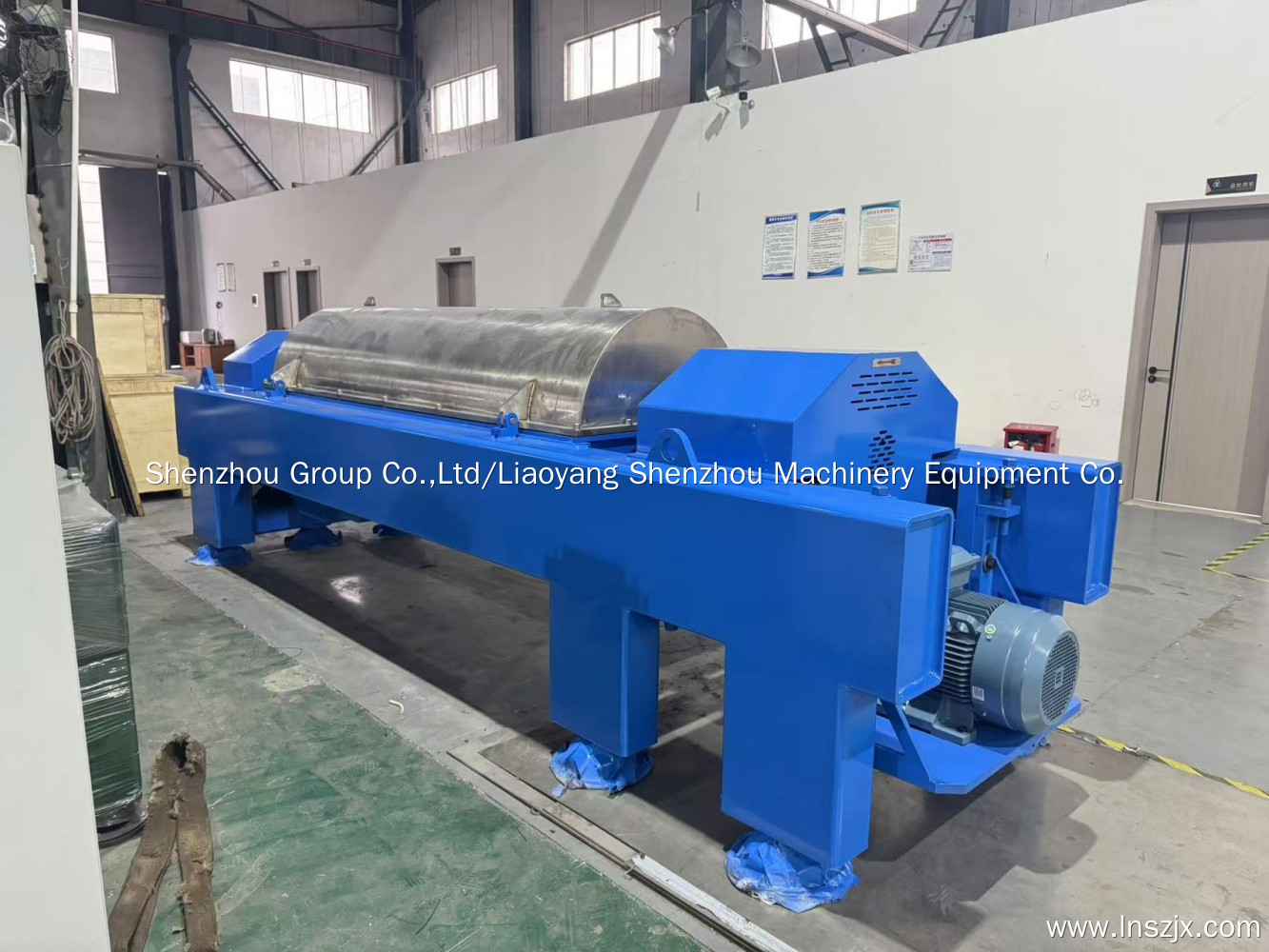
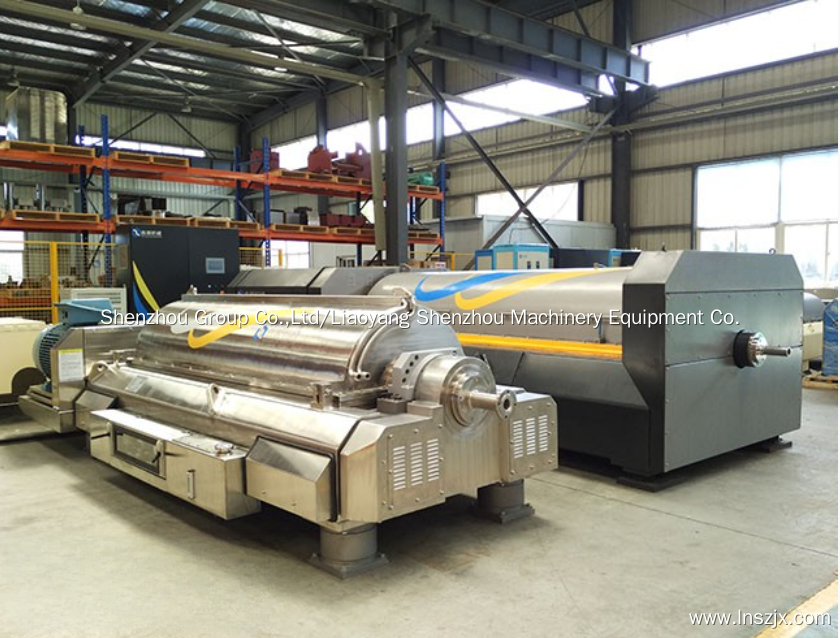
SHENZHOU offers the Ethanol industry high capacity decanter centrifuge technology applicable for DDGS whole stillage dewatering.
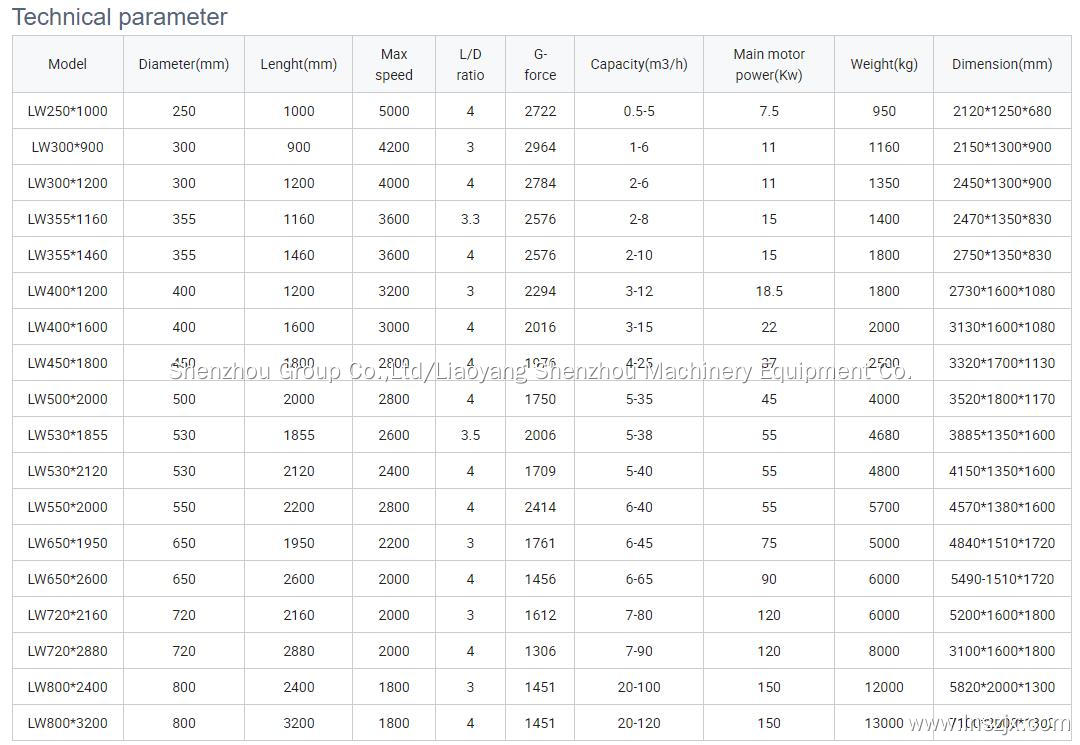
SHENZHOU can supply a full range of SHENZHOU decanter centrifuges customized for whole stillage dewatering applications up to 500-gpm. For corn dry milling plants, expected performance is 80-85% recovery of suspended solids with 32-35% dry cake, depending on feed temperature and whole stillage concentration. Normally for wheat, barley and other grains, we can expect the same performance with reduced machine capacity.
Bioethanol, which depends on the fermentation of plant-based sugars and starches, is a gasoline substitute. The most commonly used feedstocks are corn and sugar cane.
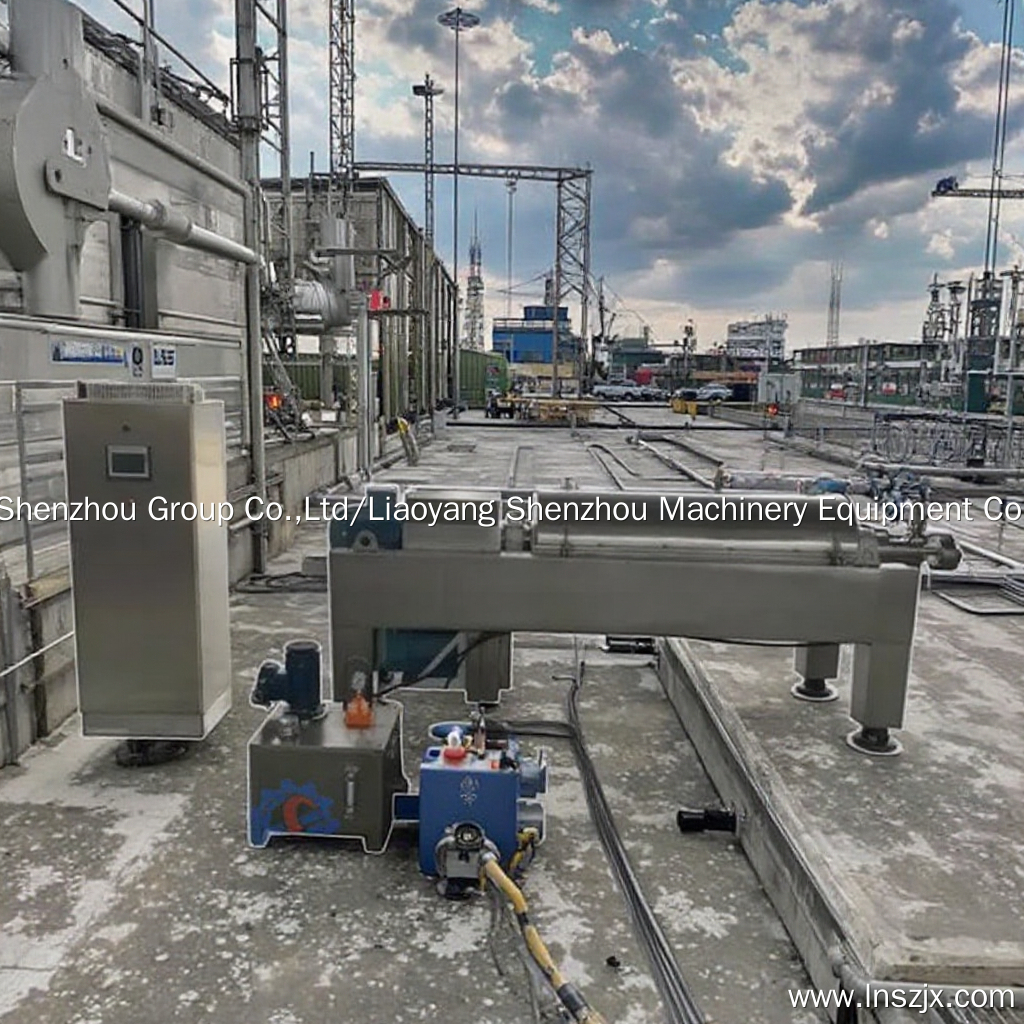 | 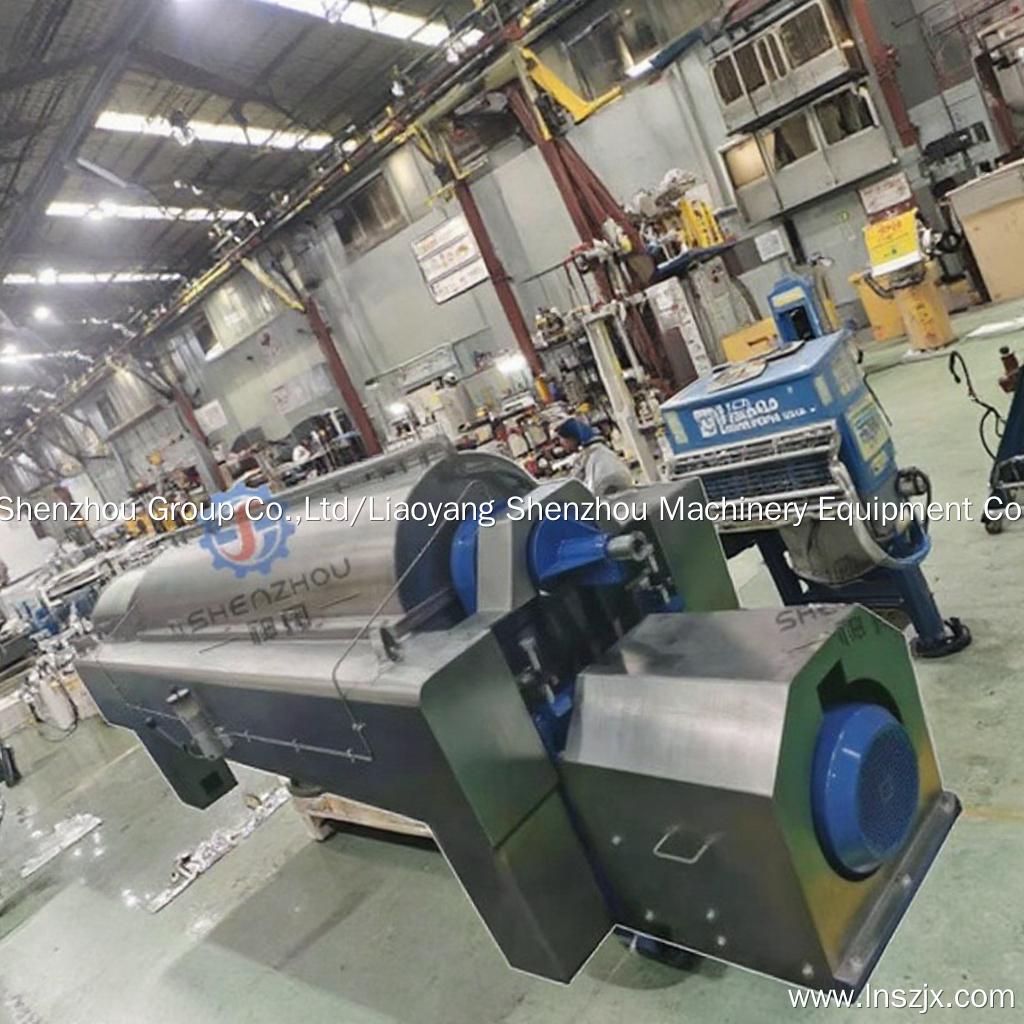 |
Ethanol production from starch-based feedstocks like corn and wheat, creates tons of stillage which can be used in animal feed, preferably as dried distiller’s grain with solubles (DDGS). Decanter centrifuges separate the stillage into a centrate called "thin stillage" which contains proteins and microfibers, and a solids phase called wet cake that contains the coarse constituents of the grain's fiber.
The centrate (thin stillage) with proteins, yeast and microfibers, is evaporated to produce a syrup, also known as "thick stillage". If corn is used as feedstock the thick stillage also contains corn oil that can be obtained with centrifugal separators to get the most out of your raw material and process. After deoiling the thick stillage is mixed with the wet cake from the decanter and dried to form DDGS.
In ethanol production from sugar-based feedstocks like sugar cane or molasses vinasse is produced in the distillation stage. After further concentration by evaporation the vinasse concentrate is treated by decanters. The finally obtained vinasse products are used as additives in animal feed and as fertilizer.
Features & Benefits
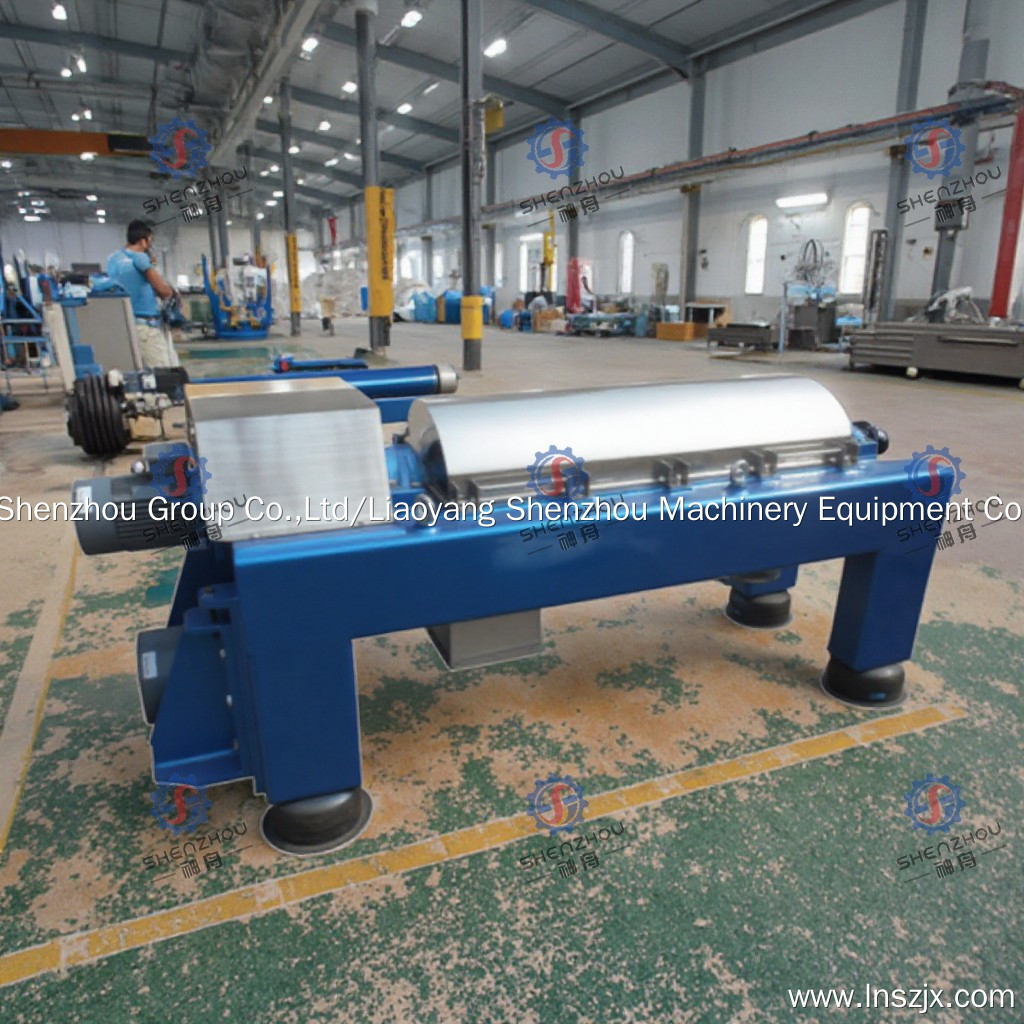
Highest separation efficiency and drier cake due to deep pond design with high g-volume, automatic differential speed adjustment and always full torque
Energy efficient design: small solids discharge diameter and energy jets for less energy demand
Robust and reliable operation: external gears for less exposure to high temperatures, oil + air lubrication for all main bearings
Advanced wear protection: Tiles and tungsten carbide protection for longer uptime
VFD drive for high flexibility because of bowl speed changing during production
Compact Design: small footprint, easy access to all service relevant parts
 |  |  |
DDGS Industry Insight
To enhance revenue streams, many ethanol producers have expanded their product offerings to include a variety of sectorssuch as biofuels, plastics, fertilizers, carbon dioxide, disinfectants, and animal feed.
Distilers dried grains with solubles (DDGS) constitute a key by-product of the brewing industry, with approximately 98%sourced from ethanol plants and the remaining 2% from the alcoholic beverage industry.
Mainly derived from corn and, to a lesser extent, wheat & rice, DDGS production has witnessed substantial growth since
2000, reaching an approximate output of 35 million tons in 2011, alongside a notable surge in exports.In the United States, a significant portion of DDGS finds its way into dairy and beef cattle feed, with approximately 20%allocated to swine and poultry feed.
Ethanol and DDGS emerge as final products in the production process, with decanter centrifuges utilizedfor lees dehydration post-ethanol distilation. Additionally, should the need arise, energy can be harnessed from the liquidphase byimplementing a biogas plant.
Key Steps
Preceding fermentation, the slurry necessitates cooling to 32'C, 0nce this optimal temperature is atained, fermentationinitiates. Within the fermenter, the slurry combines with water and activated yeast, catalyzing the conversion of grainsugars into ethanol and carbon dioxide. Depending on desired alcohol concentrations, fermentation typically spansapproximately two days.
The resultant fermented mixture undergoes separation in a distillation column, where alcohol is isolated from water andother impurities, yielding nearly 95% pure ethanol.
Concurrently, the solid-liquid mixture produced during fermentation proceeds to a decanter centrifuge for dehydration. Thesolid phase undergoes dehydration within the decanter centrifuge before advancing to the drying phase.
During drying, the liquid phase transforms into thick pulp via evaporation and is reincorporated into the wet cakesubseguently directed to a tube bundle dryer to achieve a moisture content of roughly 10%-14%.
The dehydration process plays a critical role in mitigating grain combustion risks, altering color, preserving nutrientintegrity, and moderating their degradation rate.
For cattle feed applications, the decanter solids output can be utilized directly without the need for drying. However, forsheep and fish feed, drying is essential to ensure optimal quality and suitability for consumption.
DDGS Involved Processing Steps
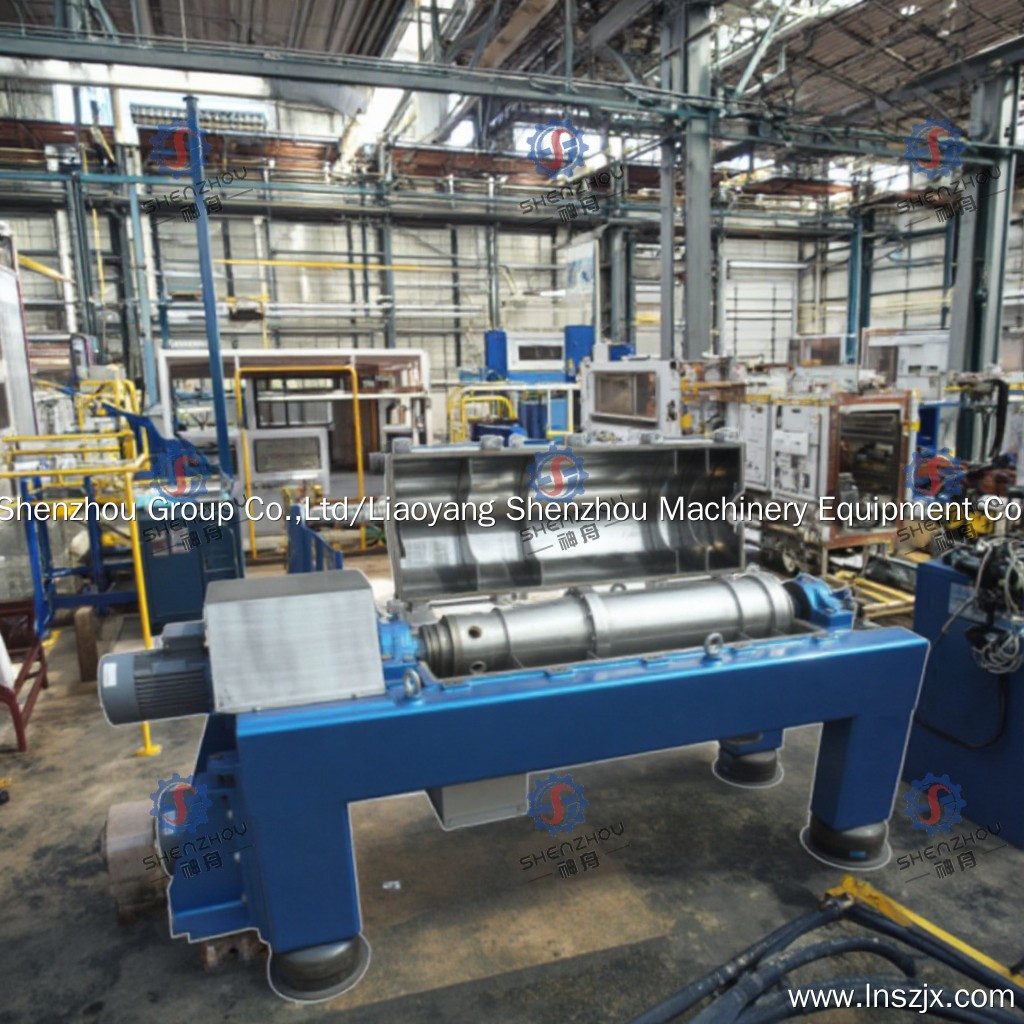
The structure and working principle of the decanter centrifuge (taking DDGS production as an example)
Structure
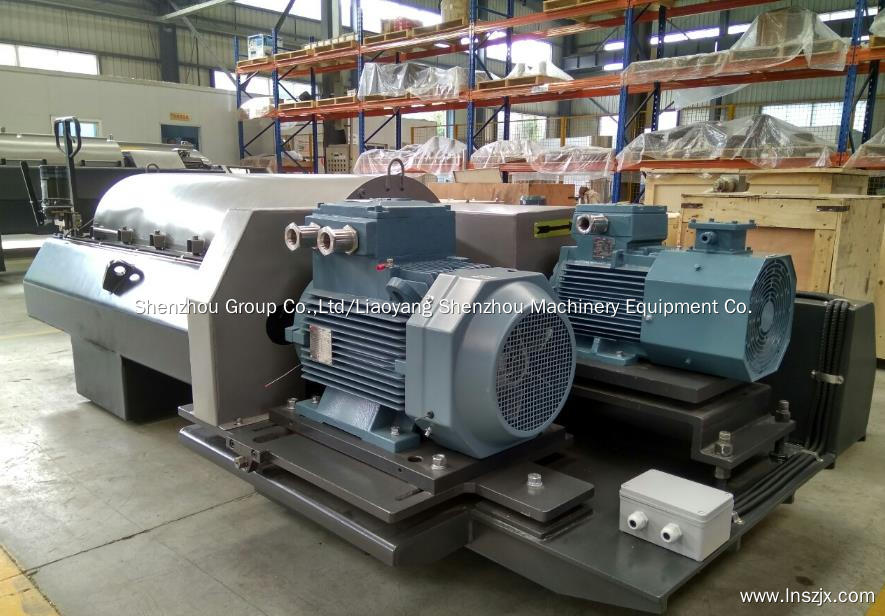
The decanter centrifuge comprises three primary components:
Drum Section: This section encompasses the cylinder and cone, serving as the housing for the materials undergoingseparation. As the drum rotates, centrifugal force aids in the separation of solids and liquids.
Screw Conveyor: Positioned within the drum. As the drum rotates, the screw conveyor facilitates the continuousremoval of solids, ensuring efficient separation.
Drive Mechanism: The driving device, comprising a motor and gearbox, orchestrates the rotation of both the drum andthe screw conveyor. By adjusting the diferential speed between these components through the gearbox, operators canfine-tune the separation process according to specific reguirements, optimizing efficiency and performance.
Working Principle:
In the context of DDGS production, the decanter centrifuge operates as follows:
Feed lntroduction: The mixture of fermented solids and liquids, obtained from the fermentation process, is introducedinto the decanter centrifuge.
Centrifugal Separation: Upon entry, the drum rapidly rotates, generating centrifugal force. This force causes the densersolid particles to migrate outwards towards the drum's periphery, while the lighter liquid phase remains closer to the center.
Screw Conveyance: As the solid particles accumulate along the drum's periphery, the screw conveyor facilitates theircontinuous removal towards the discharge port. This ensures the efficient extraction of solids from the liquid phase.
Liquid Discharge: Simultaneously, the clarified liquid phasetravels towards the center of the drum and exits through aseparate outlet.
Fine-Tuning: The speed differentials between the drum and the screw conveyor can be adjusted via the gearbox,allowing operators to optimize separation efficiency based on factors such as particle size, density, and desiredproductquality.
 |  |  |
Welcome all who care engaged in the separation and filtration to work with us,and we are also looking for the qualified world wide agents to provide better service and deep marketing.
Copyright © 2025 Shenzhou Group Co.,Ltd/Liaoyang Shenzhou Machinery Equipment Co.,Ltd - www.lnszjx.com All Rights Reserved.辽ICP备18010813号-1