Decanter Centrifuge
Shenzhou Machinery - Professional Industrial Centrifuge Machine Manufacturer and Centrifugal Separators Supplier in China
Language
Shenzhou Machinery - Professional Industrial Centrifuge Machine Manufacturer and Centrifugal Separators Supplier in China
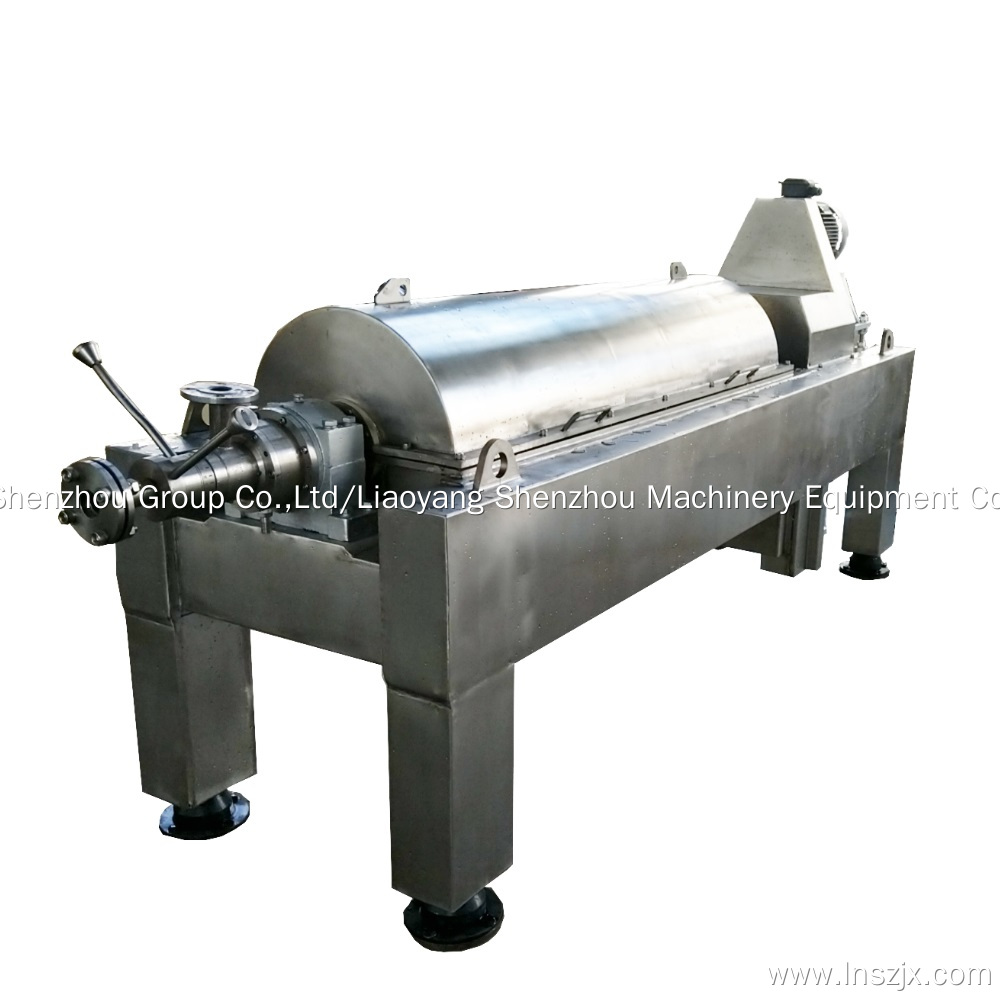
The full name of the decanter centrifuge is the horizontal screw decanter centrifuge, which is a widely used equipment in the field of industrial solid-liquid separation. According to the characteristics of different materials in different industries, Shenzhou decanter centrifuge is divided into dewatering, separation, and clarifying decanter centrifuge. With centripetal pump technology, Shenzhou decanter centrifuge can also realize the 3-phase separation of liquid, liquid, and solids.
he separation process in a decanter centrifuge relies on a few process characteristics such as centrifugal force or G-force, sedimentation rate and separating factor, differential speed between the conveyor and bowl, and clarity of the liquid discharge.Decanter centrifuges require a centrifugal force for the separation of the solids from the liquid. This characteristic is dependent on the radius of the centrifuge and its angular rotational speed. A decanter centrifuge applies a force equivalent to several thousand G’s, which reduces the settling time of the particles. It is also favored to maintain a large G-force, which will result in an improved separation.
The rate at which sedimentation occurs is an important characteristic of the decanter centrifuge separation process.
The sedimentation rate is influenced by the particle size, the shapes of the particles, their differential densities and the viscosity between the particles and the liquid. This process characteristic can be improved by utilizing flocculating agents. The sedimentation rate is also dependent on the separating factor of the decanter centrifuge, which is related to the centrifugal force.
The exterior bowl and the scroll conveyor rotate at different high speeds. This differential speed between the two is accountable for the sedimentation throughout the decanter centrifuge cylinder. A high differential speed results in a smaller residence time of the cake settlement, so it is necessary to keep the cake thickness to a minimum to avoid impairing the discharge quality.
Keeping the cake thickness to a minimum also aids in the improvement of the cake dewatering process. For this reason, it is necessary to obtain an optimal differential speed to balance the cake thickness and quality.
The characteristic above all affects the clarity of the liquid output which is dependent on the volumetric throughout rate, where a higher flow rate will result in a poor liquid clarity. Another characteristic that influences the clarity of the liquid output is the differential speed. A low differential speed results in a better clarity, therefore, aiding in the separation process. The G-Force also plays a role in the clarity of the liquid discharge. Higher G-force results in an increase in the separation of the solid particles from the liquid and yields a better clarity.
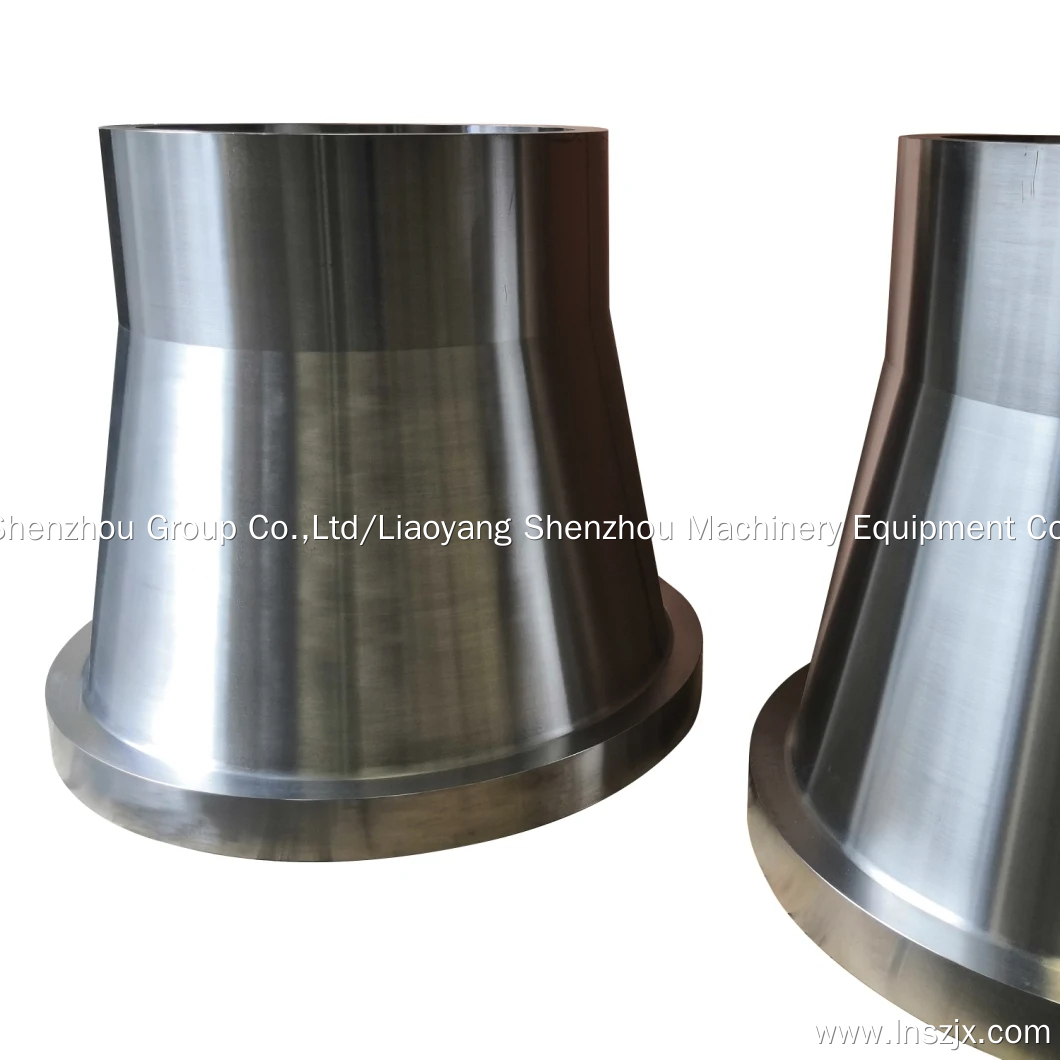
3 phase decanter centrifuge is mainly designed for Solid-liquid-liquid three-phase separation of materials.With our over 40 years of experience in the separation industry, it is the most advanced type machine for 3 phase separation. It is designed for 24 hours continuous and smooth operation throughout the day. It is mainly composed of driving system, decanter bowl, screw conveyor inside the bowl, cover box, skid and VFD control panel.
To ensure that the separation process can take place, the solid phase must be the specifically heaviest phase and the two liquid phases must have different densities.The main difference between the 2 phase decanter and 3 phase decanter is that the 3 phase decanter not only separate the solids but also separate two phase of the liquid.
3 phase decanter is widely used for oil , water, solids separation industry.
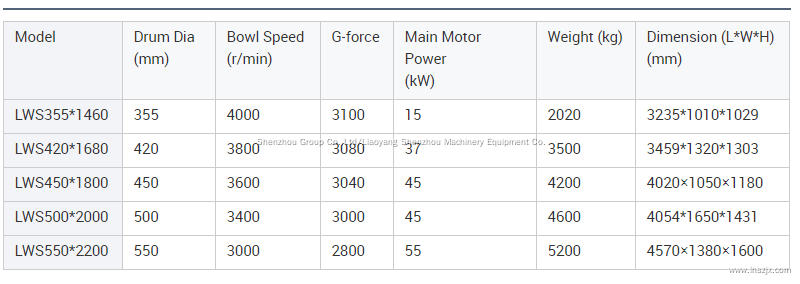
Technical Parameter:
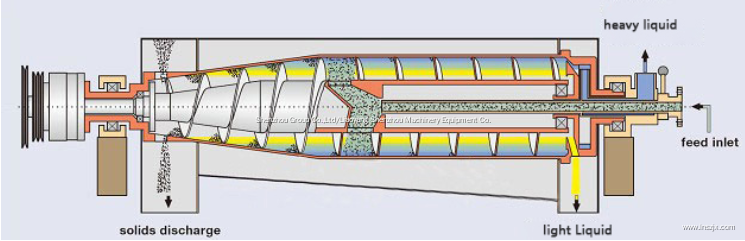
3 PHASE DECANTER WORKING PRINCIPLE
The three-phase decanter centrifuge operation is based on the principle of sedimentation, that is, solid particles with specific liquid weight precipitate in a predetermined time. This principle can also be applied to two immiscible liquids with different specific gravity. When the material enters the high-speed rotating drum, the material rotates synchronously with the drum. Because of the different specific gravity, the centrifugal force is different. The solid particles with the larger specific gravity are subjected to the greatest centrifugal force, followed by the heavy phase liquid (such as water) and the light phase liquid (such as oil). So the centrifugal force is becoming less from outside to inside according to the magnitude of centrifugal force. A concentric solid layer and two liquid layers are formed. Solids are pushed out by the screw conveyor, and liquids are removed from their respective nozzles. Therefore, the application of three-phase decanter centrifuge can not only separate the solid in the material, but also separate the two-phase liquid with different specific gravity in the material, that is, Solid-liquid-liquid separation can be achieved.
Bowl Material: Duplex Stainless Steel SS2205
Solids Discharge port: Tungsten Carbide insert
Bearing: SKF or Japan NSK Brand
Gearbox type: planetary wheel type
Screw Conveyor Material: Duplex Stainless Steel SS2205
Material Distribution Nozzle: : Tungsten Carbide insert
Screw Conveyor Wear Protection: Tungsten Carbide Tiles
Differential Speed: Adjustable according to conditions
Bearing: SKF or Japan NSK Brand
Flexible for different Liquid Phase Proportion:
An adjustable impeller discharges the "heavy" liquid phase. Furthermore, the operator can use the adjustable impeller to adjust the pond depth of the heavy liquid without difficulty during ongoing operation. According to the Proportion of two different phase, An adjustment mechanism causes the position of the impeller to change, thus changing the separation line of the liquids. The process engineering results can thus be influenced so as to achieve the required separation result.
Welcome all who care engaged in the separation and filtration to work with us,and we are also looking for the qualified world wide agents to provide better service and deep marketing.
Copyright © 2025 Shenzhou Group Co.,Ltd/Liaoyang Shenzhou Machinery Equipment Co.,Ltd - www.lnszjx.com All Rights Reserved.辽ICP备18010813号-1