Shenzhou Machinery - Professional Industrial Centrifuge Machine Manufacturer and Centrifugal Separators Supplier in China
Language
Shenzhou Machinery - Professional Industrial Centrifuge Machine Manufacturer and Centrifugal Separators Supplier in China
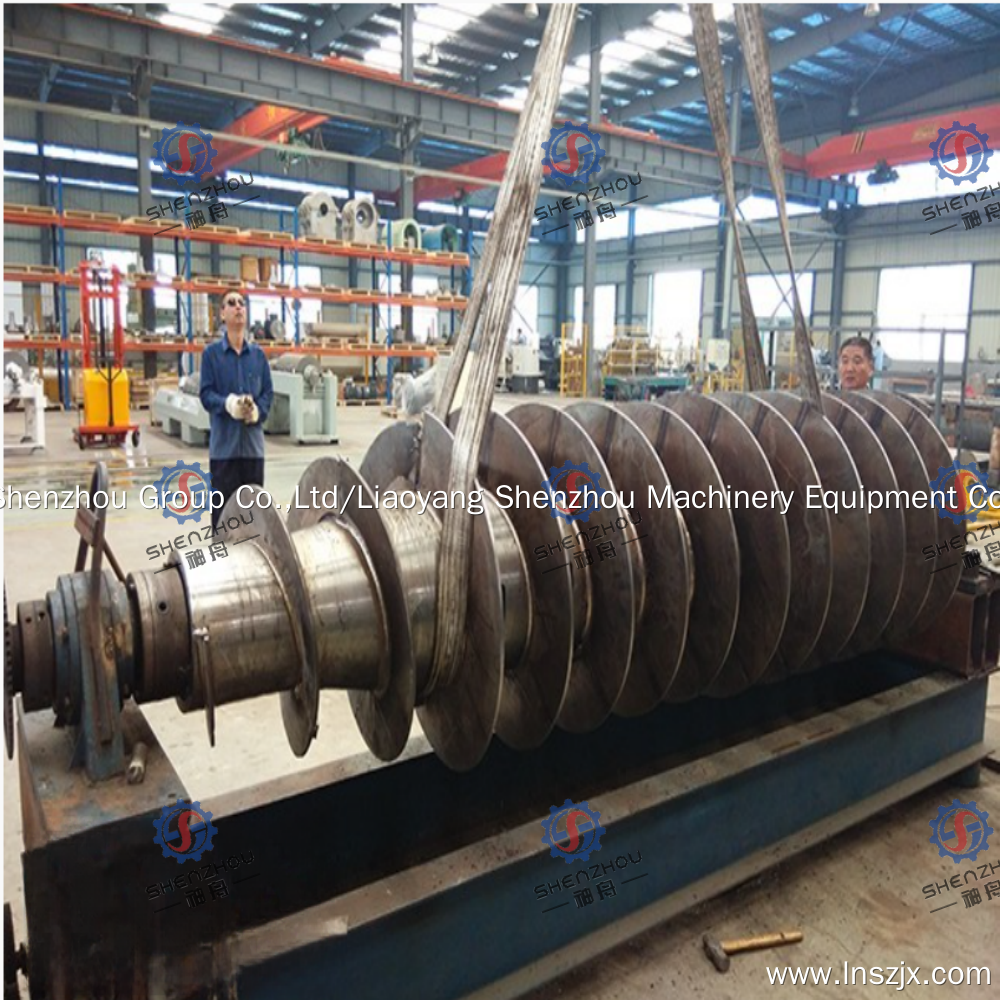
Automatic horizontal oil separator 3 phase decanter centrifuge
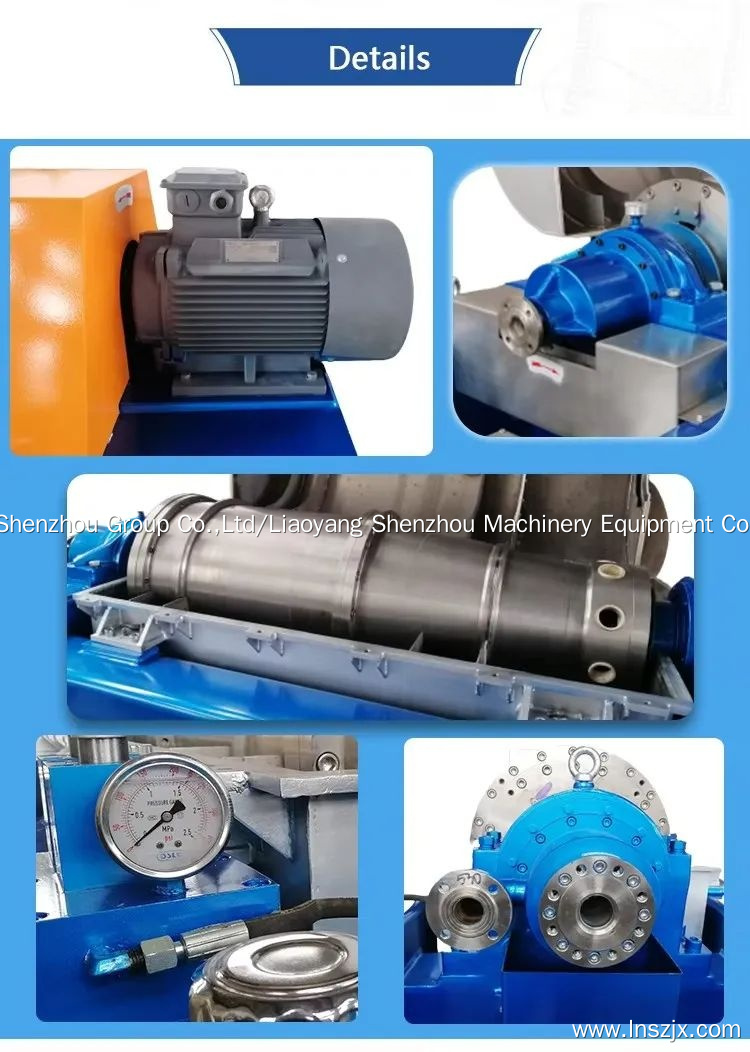
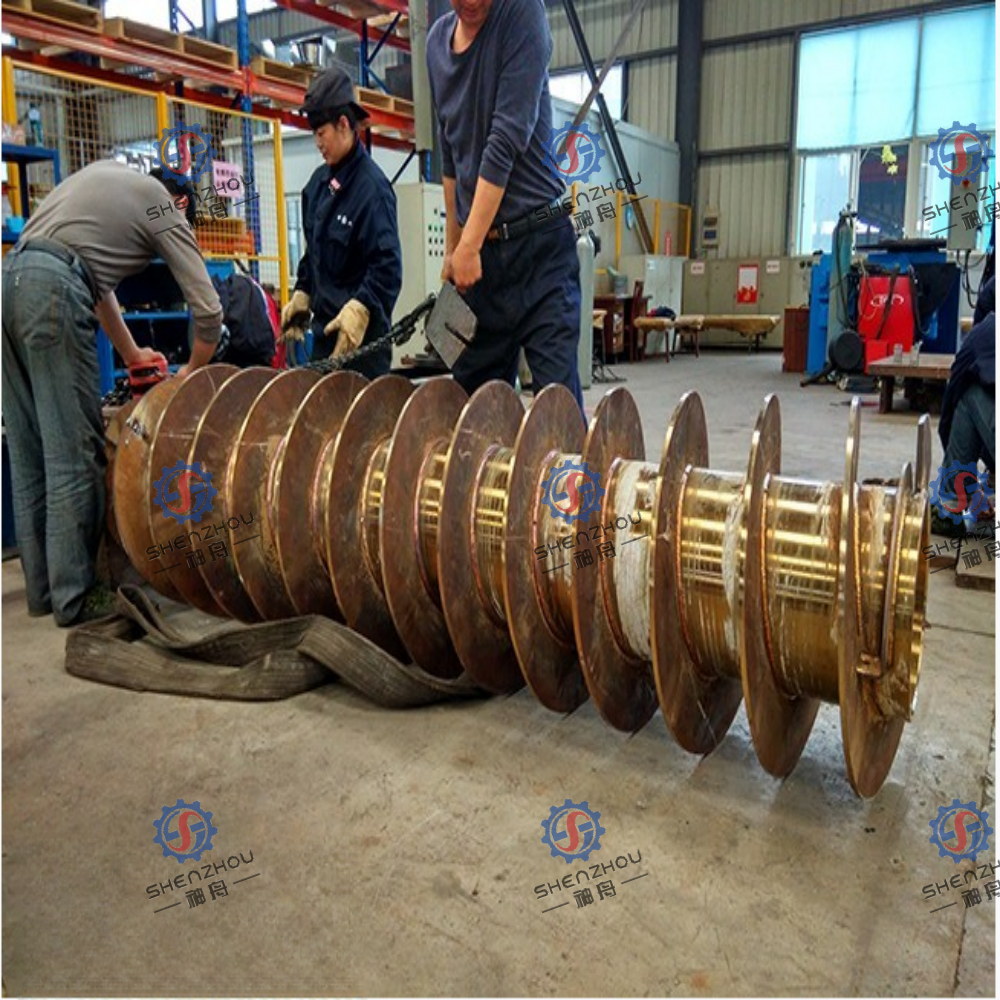
3 phase horizontal screw centrifugal dehydrator is a high-speed, stable and efficient automatic control equipment, which is mainly used for solid-liquid oil clarification and separation in food waste treatment, petrochemical and other industries. All parts and components in contact with materials are made of high-grade stainless steel materials, which effectively reduces the corrosion of the separated materials and the surfaces of the parts in contact. The separated materials enter the drum of the centrifuge. Under the strong centrifugal force field, the materials are accelerated by the accelerating cone and then enter the material separation zone between the screw pusher and the straight section drum. The solid materials with large specific gravity move along the direction of the drum wall, accumulate in the sediment zone of the drum wall, and are transported out of the centrifuge by the screw pusher. The liquid phase materials with small specific gravity are pushed on the surface of the sedimentation tank by the heavy phase materials, and move toward the light phase outlet under the axial force of the cone section drum. The separated light phase material is thrown out by the centrifugal force of the drum itself, and flows out of the centrifuge after free convergence.
3-Phase Separating Decanter centrifuge also called tricanter in the world. The 3-Phase Separating Decanter is a centrifuge in which two liquids of different densities are separated from each other. At the same time solids are separated and discharged.
3 phase decanter centrifuge
In the case of a 3-Phase Separating Decanter with centripetal pump for the light phase and gravity discharge of the heavy phase, the light liquid phase leaves the centrifugation space over an exchangeable regulating ring and is discharged under pressure by the centripetal pump. At the same time, the heavy liquid phase is discharged under gravity through exchangeable regulating tubes. Another technical variant is the case of a 3-Phase Separating Decanter with centripetal pump for the heavy phase and gravity discharge of the light phase. The choice of the appropriate design depends on the product to be separated and the lay-out of the customer installation.
 |  |
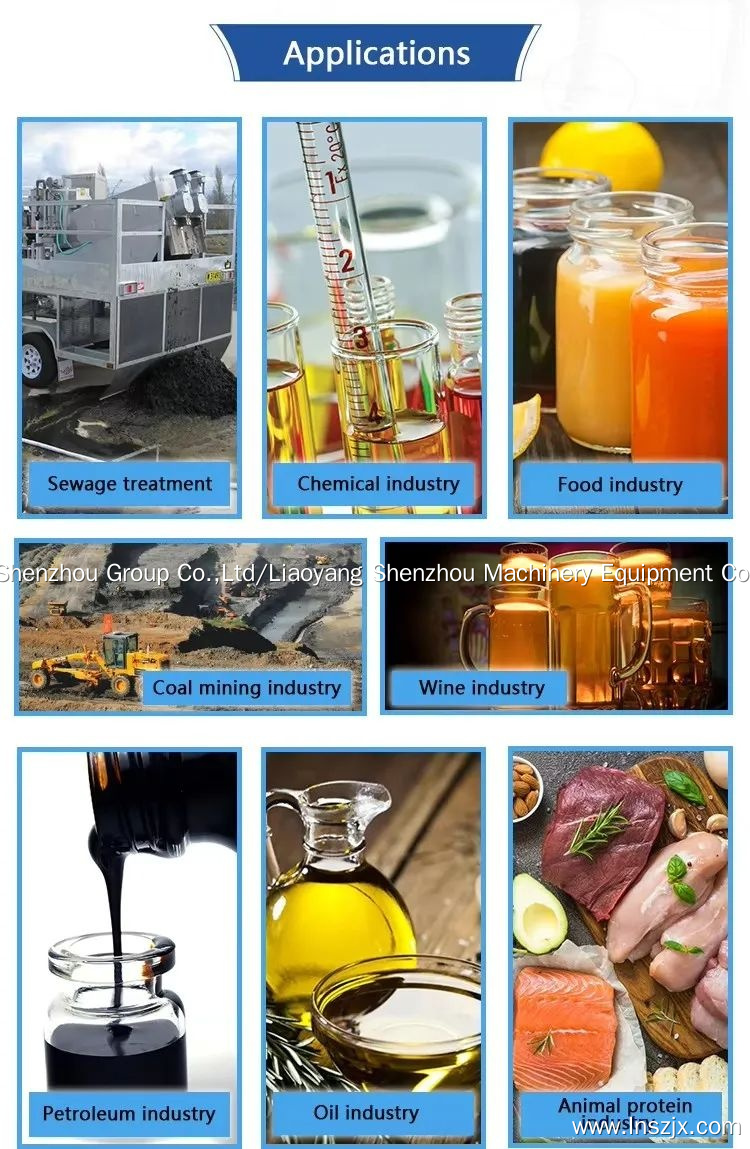
Application fields
1. Food
A Flesh processing,aquatic products processing and edibleprotein recovery;
B Extract plant protein from soybean,oily seeds andleguminous plants;
C Recovery of brewing leach liquor,malt and yeast;
D Treatment and recovery of wine lees liquid;
E Extract of instant coffee and tea;
F Clarification of palm oil,olive oil and seed oil;
G Extract juice from fruits ,berries and vegetables;
H Recovery of refined pectin; Clarification of grape juice and grape wine.
2. Environmental protection
Drilling mud,industrial efluentwaste water of municipal works, fertilizer,organic waste water,paint sludge ,plastic particles,gravel washing water,waste water in steel-making,fluegas desulfurization,sewage sludge treatment of waterworks.
3. Petroleum and chemical industry
A Processing of kaolin and calcium carbonate,production ofbentonite and titanium dioxide;
B Exploration of petroleum oil,natural gas,crude oil refiningand related industries,additive of lube oil and waste oil recovery;
C Intermediate products and final products of organic chemistry industry;
D Thermoplastic materials,includes PVC,polypropylene,polystyrene, synthetic rubber and fiber;
E Inorganic chemical industry,includes bleach,acid ,ilicaproducts and fertilizers;
F Treatment of spent wash and molasses fermentationresidues;
G Extraction of starch from wheat,corn,cassava and potato;
H Waste liquid recovery and recycling from above industries.
How it works
How does it work
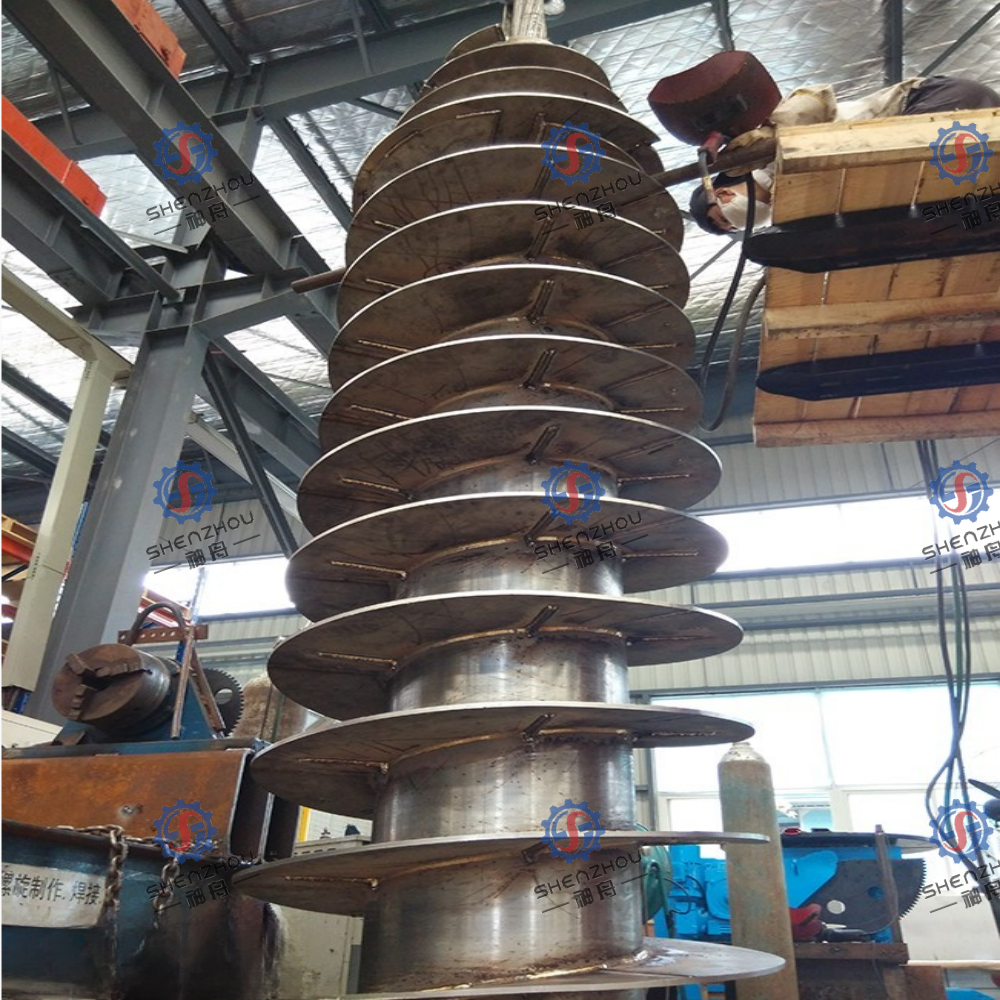
The feed product is pumped into the decanter centrifuges through the inlet. Feed goes into a horizontal bowl, which rotates. The bowl has is composed of a cylindrical part and a conical part. The separation takes place in the cylindrical part of the bowl. The fast rotation generates centrifugal forces up to 4000 x g. Under these forces, the solid particles with higher density are collected and compacted on the wall of the bowl. A scroll (also screw or screw conveyor) rotates inside the bowl at a slightly different speed. This speed difference is called the differential speed. This way the scroll is transporting the settled particles along the cylindrical part of the bowl and up to the end conical part of the bowl. At the smallest end of the conical part of the bowl, the dewatered solids leave the bowl via discharge opening. The clarified liquid leaves through a paring disc (internal centripetal pump).
3-phase separation with a decanter
With a 3 phase decanter centrifuge, it is possible to separate 3 phases from each other in one process step only. For example, two liquids which cannot be mixed because of different densities (e.g. oil and water) are separated from a solids phase. The heavy liquid (water) collects in the middle between the oil and the solids layer. Thus the two liquids separated from each other can be drawn off from the decanter. The solids are transported via the scroll to the discharge
openings as it happens also in 2-phase separation.Typical applications of 3-phase separation are the production of edible oils such as olive oil, oil sludge processing, the production of biodiesel etc.
Parameters and influencing factors of the separation
Feed, throughput and residence time
Through the feed, the separation medium to be processed can be input into the center of the infeed chamber of the scroll, where it is accelerated. The throughput will have an influence on the residence time.
Decanter Centrifuges Acceleration
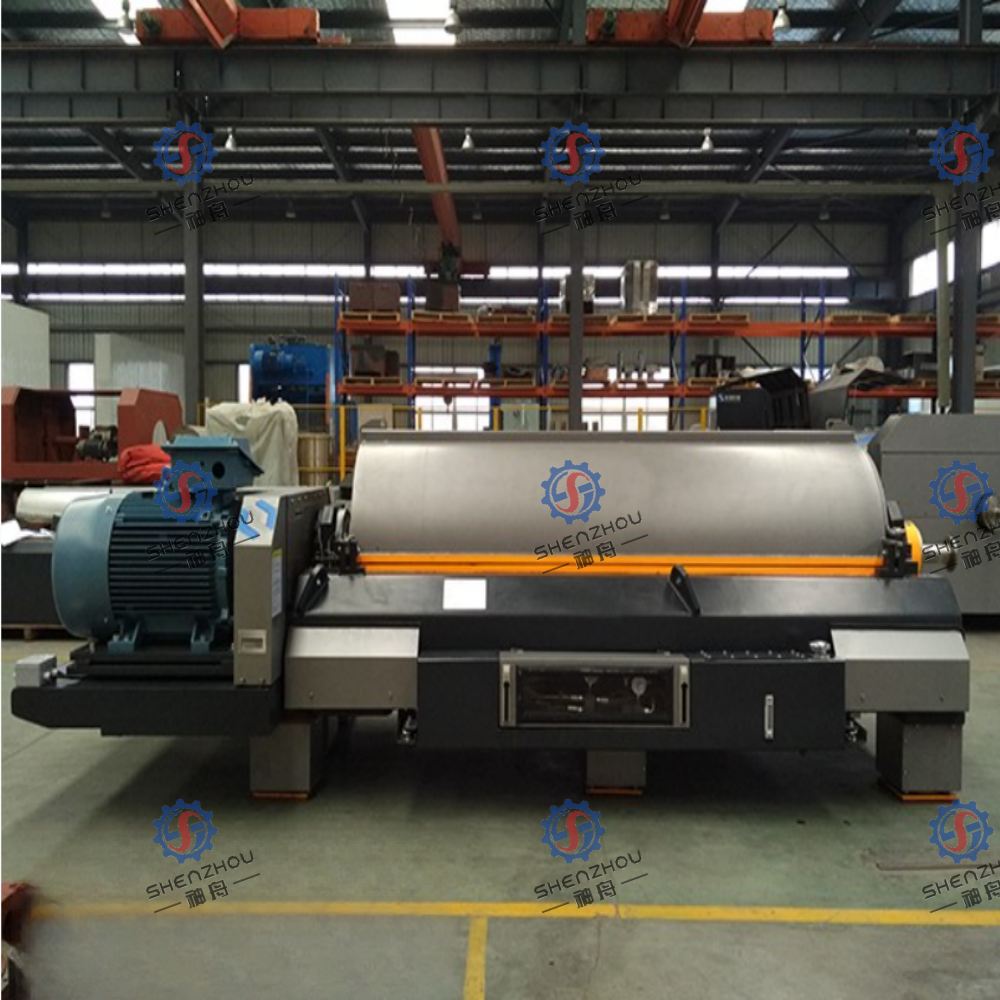
The separation medium reaches its maximum speed in the decanter bowl, causing the solids to settle on the bowl inner diameter. A characteristic feature of the bowl is its cylindrical/conical shape.
Differential speed
There is a differential speed between the decanter bowl and the scroll, which is created by a gear unit on the
industrial decanter centrifuges. The differential speed determines the solid content in the outfeed.
Filling volume / Weir discs or overflow weir The clarified liquid flows to the cylindrical end of the bowl in the decanter centrifuge, from where it runs out through openings in the bowl cover. These openings contain precisely adjustable weir discs/weir plates by means of which the pond depth in the bowl can be set. The weir discs determine the filling volume of the bowl.
 |  |  |
Advantages and limitations over competitive processes
Generally the decanter centrifuge has more advantages than disadvantages; however, there are some limitations when compared to other processes.
Decanter Centrifuges Advantages:
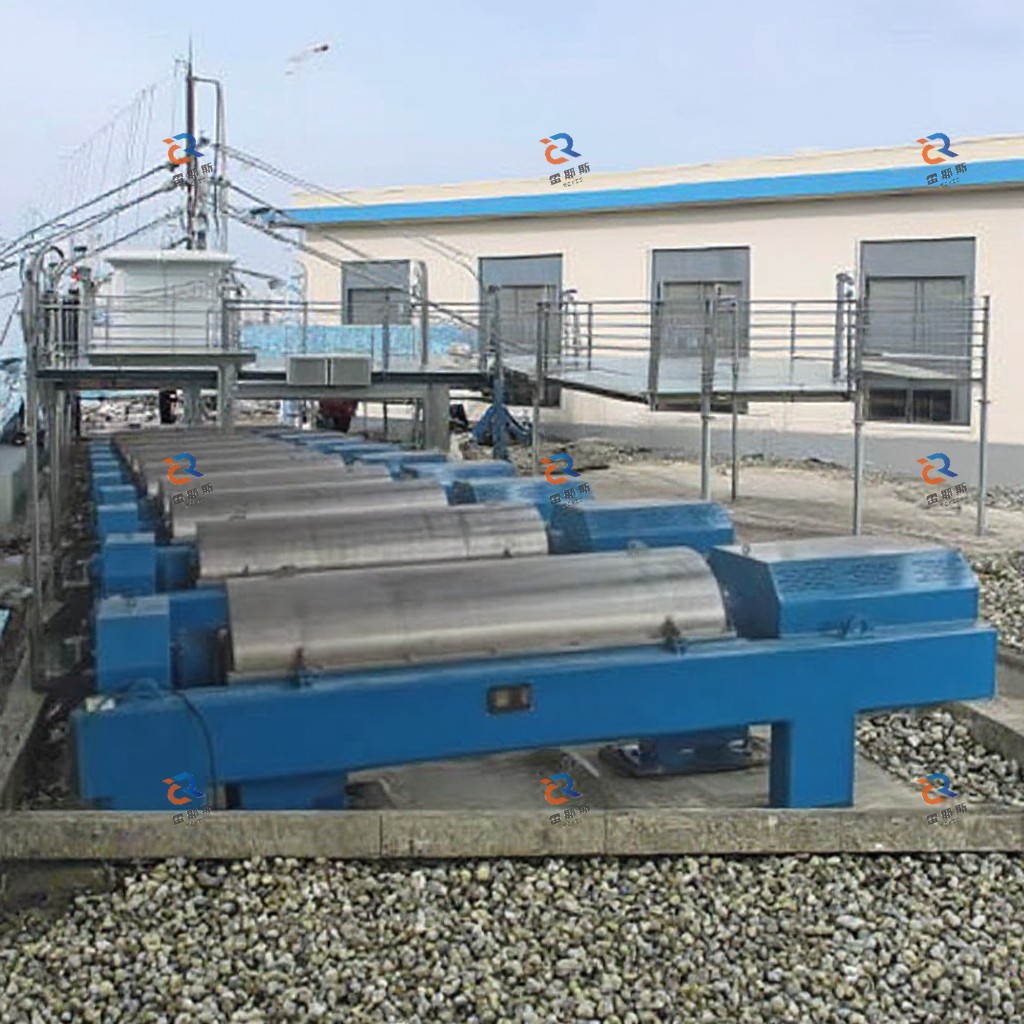
* Decanter centrifuges have a clean appearance and have little to no odor problems.
* Not only is the device easy to install and fast at starting up and shutting down but also only requires a small area for
operation compared to other competitive processes.
* The decanter centrifuge is versatile as different lengths of the cylindrical bowl section and the cone angle can be selected for different applications. Also, the system can be pre-programmed with various design curves to predict the sludge type, while some competitive processes, such as a belt filter press, cannot change the belt type to operate for different sludge types. Its versatility allows the machine to have various functions such as operating for thickening or dewatering.
* The machine can operate with a higher throughput capacity than smaller machines. This also reduces the number of units required.
* The device is simple to optimize and operate as it has few major variables and reliable feedback information.
* The decanter centrifuge has reduced labor costs compared to other processes, as it requires low continuous maintenance and operator attention.
* Compared to some competitive process such as the belt filter process, the decanter centrifuge has more process flexibility and higher levels of performance.
 |  |  |
Decanter Centrifuges Limitations:
* The decanter centrifuges cannot separate biological solids with very small density differences, such as cells and viruses. A competitive process that is capable of separating these difficult-to-separate solids is the tubular-bowl centrifuge.
* The machine can be very noisy and can cause vibration.
* The device has a high-energy consumption due to high G-forces.
* The decanter centrifuge has high equipment capital costs. Hard surfacing and abrasion protection materials are required for the scroll to reduce wear and therefore reduce the maintenance of the scroll wear.
 |  |  |
Welcome all who care engaged in the separation and filtration to work with us,and we are also looking for the qualified world wide agents to provide better service and deep marketing.
Copyright © 2025 Shenzhou Group Co.,Ltd/Liaoyang Shenzhou Machinery Equipment Co.,Ltd - www.lnszjx.com All Rights Reserved.辽ICP备18010813号-1