


Table of Contents
What scenarios are different types of centrifuges suitable for?
2025-05-16
×
Different types of centrifuges are suitable for diverse scenarios due to differences in rotational speed, structure, and separation principles. Below is a detailed explanation of common centrifuge types and their typical application scenarios:
### **1. Application Scenarios of Centrifuges Classified by Rotational Speed**
#### 1. **Low-Speed Centrifuge**
- **Speed**: <3,000 rpm
- **Core Scenarios**:
- **Medical Testing**: Separation of blood samples (e.g., serum/plasma extraction), urine sediment analysis.
- **Biology Labs**: Collection of large-particle microorganisms such as yeast and bacteria (e.g., centrifugation of *E. coli*).
- **Food Industry**: Juice clarification (separating pulp residue), dairy processing (e.g., whey separation in cheese production).
- **Characteristics**: Simple operation, low noise, suitable for separating larger particles or high-concentration samples.
#### 2. **Medium-Speed Centrifuge**
- **Speed**: 3,000–15,000 rpm
- **Core Scenarios**:
- **Biological Engineering**: Separation of cell culture fluids (e.g., collection of animal and plant cells).
- **Chemical Industry**: Solid-liquid separation of pigments and dyes (e.g., impurity removal in paint production).
- **Pharmaceutical Industry**: Primary separation of antibiotic fermentation broth (e.g., microbial recovery in penicillin production).
- **Characteristics**: Balances efficiency and sample protection, suitable for biological or industrial samples with medium particle sizes.
#### 3. **High-Speed Centrifuge**
- **Speed**: 15,000–50,000 rpm
- **Core Scenarios**:
- **Molecular Biology**: Plasmid DNA extraction, protein purification (e.g., separating cell organelles via differential centrifugation).
- **Virus Research**: Separation and concentration of virus particles (requires cooling function to prevent sample denaturation).
- **Fine Chemicals**: Fractionation of nanomaterial dispersions (e.g., separation of carbon nanotubes and graphene).
- **Characteristics**: High speed generates strong centrifugal force, suitable for separating micron-to-submicron particles, often equipped with cooling systems.
#### 4. **Ultracentrifuge**
- **Speed**: >50,000 rpm (up to 1,000,000 rpm)
- **Core Scenarios**:
- **Biomedical Research**: Density gradient centrifugation of DNA/RNA (e.g., separating nucleic acids of different molecular weights via CsCl gradients), viral capsid structure analysis.
- **Materials Science**: Particle size distribution measurement of colloidal particles (e.g., liposomes, nanoemulsions).
- **Polymer Research**: Analysis of polymer molecular weight distribution (via sedimentation velocity or sedimentation equilibrium methods).
- **Characteristics**: Requires a vacuum environment to reduce heat and resistance, commonly used for molecular or nanoscale separation, with extremely high equipment costs.
### **2. Application Scenarios of Centrifuges Classified by Separation Principle**
#### 1. **Filter Centrifuge**
- **Principle**: Centrifugal force drives liquid through filter media, retaining solid particles.
- **Typical Equipment**: Three-foot centrifuges, scraper discharge centrifuges.
- **Application Scenarios**:
- **Food Processing**: Separation of sucrose crystals, starch dehydration (e.g., corn starch production).
- **Chemical Industry**: Solid-liquid separation of fertilizers (e.g., urea, ammonium chloride), filtration of resin particles.
- **Mining Industry**: Tailings dewatering in mineral processing (e.g., slag treatment in copper and gold mines).
- **Suitable Materials**: Suspensions with larger particles (>5μm), high solid content (>10%), and good flowability.
#### 2. **Sedimentation Centrifuge**
- **Principle**: Uses centrifugal force to sediment and layer components of different densities.
- **Typical Equipment**:
- **Tubular Bowl Centrifuge**:
- **Scenarios**: Biopharmaceuticals (e.g., virus particle separation in vaccine production), vegetable oil degumming (separating phospholipids), blood component separation (e.g., platelet extraction).
- **Characteristics**: Extremely high speed (15,000–50,000 rpm), suitable for separating tiny particles or emulsions.
- **Disc Centrifuge**:
- **Scenarios**: Dairy industry (milk dregs removal, cream separation), petroleum refining (crude oil dehydration and desalting), biodiesel production (separating glycerol and methyl esters).
- **Characteristics**: Multi-disc structure accelerates sedimentation, suitable for liquid-liquid or liquid-solid-liquid three-phase separation.
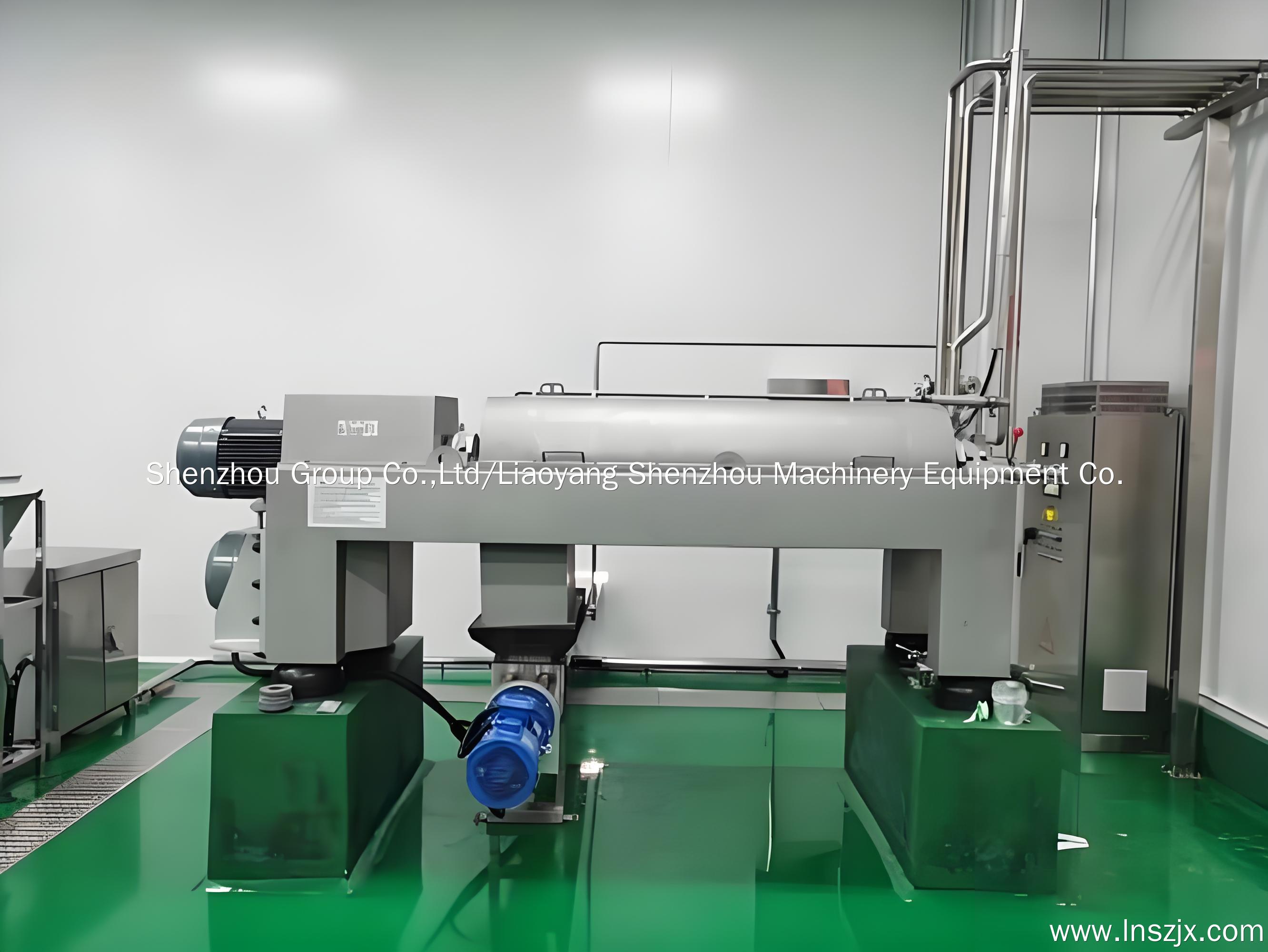
- **Decanter Centrifuge**:
- **Scenarios**: Industrial wastewater treatment (sludge dewatering), food processing (juice dregs removal, animal fat refining), chemical waste treatment (e.g., desalting pesticide wastewater).
- **Characteristics**: Continuous operation, automatic slag discharge via screw pusher, suitable for large-scale solid-liquid separation.
### **3. Application Scenarios of Centrifuges Classified by Operation Mode**
#### 1. **Batch Centrifuge**
- **Operation Features**: Batch feeding, separation, and discharging, requiring manual or semi-automated control.
- **Typical Equipment**: Three-foot centrifuges, piston pusher centrifuges.
- **Application Scenarios**:
- **Laboratories and Small-Scale Production**: Pharmaceutical R&D (small-batch drug crystal separation), fine chemicals (multi-variety, small-batch raw material processing).
- **Special Material Handling**: Separation of deformable particles (e.g., yeast cells) requiring protection from mechanical damage.
#### 2. **Continuous Centrifuge**
- **Operation Features**: Continuous material input and discharge, high automation.
- **Typical Equipment**: Decanters, disc separators, spiral discharge filter centrifuges.
- **Application Scenarios**:
- **Large-Scale Industrial Production**: Food and beverage (e.g., beer clarification, continuous starch dehydration), environmental protection (continuous sludge dewatering in wastewater treatment plants).
- **High-Viscosity Material Handling**: Continuous separation of chemical slurries (e.g., polymer slurries) requiring high throughput.
### **4. Typical Scenarios for Special-Purpose Centrifuges**
#### 1. **Refrigerated Centrifuge**
- **Core Function**: Maintains low temperatures (typically 4–20°C) to prevent biological sample denaturation.
- **Application Scenarios**:
- **Molecular Biology Experiments**: Separation of heat-sensitive biomacromolecules such as enzyme solutions and antibodies.
- **Blood Banks and Hospitals**: Low-temperature separation of blood components (e.g., cryopreservation centrifugation of platelets and plasma).
#### 2. **Explosion-Proof Centrifuge**
- **Design Features**: Explosion-proof motors and control systems for flammable and explosive environments.
- **Application Scenarios**:
- **Petrochemical Industry**: Solvent recovery (e.g., separation of acetone and ethanol), wastewater treatment containing volatile organic compounds (VOCs).
- **Hazardous Materials Production**: Separation of explosive raw materials (e.g., nitrocellulose suspensions).
#### 3. **Supercritical Fluid Centrifuge**
- **Principle**: Combines supercritical fluids (e.g., CO₂) with centrifugal force to separate heat-sensitive materials.
- **Application Scenarios**:
- **Natural Product Extraction**: Low-temperature separation of plant essential oils (e.g., rose and lavender oils) to preserve active components.
- **Food Industry**: Decaffeinated coffee production (centrifugal separation after supercritical CO₂ extraction).
#### 4. **Aseptic Centrifuge**
- **Design Features**: Fully enclosed aseptic structure, supporting in-line cleaning (CIP) and sterilization (SIP).
- **Application Scenarios**:
- **Biopharmaceuticals**: Aseptic separation and purification of vaccines (e.g., COVID-19 vaccines) and monoclonal antibodies.
- **Aseptic Dairy Processing**: Aseptic dregs removal in pasteurized milk to ensure microbial safety.
### **5. Core Logic and Cases for Model Selection**
#### 1. **Selection by Material Properties**
- **Particle Size**:
- Large particles (>5μm): Prioritize filter centrifuges (e.g., three-foot centrifuges).
- Fine particles (<5μm) or emulsions: Choose sedimentation centrifuges (e.g., disc or tubular centrifuges).
- **Thermal Sensitivity**:
- Biological samples: Select refrigerated or ultracentrifuges (with cooling functions).
- **Corrosiveness**:
- Strong acid/alkali systems: Require stainless steel or special coating materials (e.g., titanium alloy) for centrifuges (e.g., chemical industry).
#### 2. **Typical Cases**:
- **Wastewater Treatment Plants**: Require continuous sludge processing; choose decanter sedimentation centrifuges (high-efficiency slag discharge, suitable for sludge with 3%–8% solid content).
- **Biotechnology Companies**: Separating recombinant proteins (e.g., insulin); choose high-speed refrigerated centrifuges (low-temperature environment preserves protein activity).
- **Petroleum Refineries**: Crude oil dehydration and desalting; choose disc centrifuges (liquid-liquid-solid three-phase separation, high throughput).
As shown in the above classifications, selecting a centrifuge requires comprehensive consideration of material properties, separation objectives, production scale, and safety requirements to achieve efficient separation by targeting the appropriate equipment type.
ReviewsNumber of comments: {{ page.total }}
I want to comment?
{{item.nickname ? (item.nickname.slice(0, 2) + '*****') : item.source === 1 ? 'mall buyer' : '--'}}
{{item.comment_time}}
Review in the {{item.country}}
Reviews
Merchant
{{replyItem.nickname ? (replyItem.nickname.slice(0, 2) + '*****') : replyItem.source === 1 ? 'mall buyer' : '--'}}
{{replyItem.parent_nickname ? (replyItem.parent_nickname.slice(0, 2) + '*****') : '--'}}
{{replyItem.is_merchant_reply === 1 ? replyItem.reply_time : replyItem.comment_time}}
Review in the {{replyItem.country}}
Reviews

No customer reviews
Recommended for you
Leave A Message
Welcome all who care engaged in the separation and filtration to work with us,and we are also looking for the qualified world wide agents to provide better service and deep marketing.
Copyright © 2026 Shenzhou Machinery is a core subsidiary of Shenzhou Group | Sitemap