


Table of Contents
How to Prevent Corrosion in Drilling Mud Centrifuges (Material Selection Guide)
2025-08-14
Your drilling mud centrifuge might be wearing out faster than expected, costing you thousands in replacement parts and lost production. Corroded components can even contaminate the drilling mud and make the wellbore unstable.
Corrosion is a common headache in drilling operations, turning otherwise profitable projects into expensive problems. Using low-quality materials or skipping proper corrosion protection often leads to early equipment failure and safety risks on site.
Choosing the right materials and applying effective corrosion control can turn these issues into simple maintenance tasks. But what’s the key to keeping your centrifuge running smoothly without constantly draining your budget?
Understanding Corrosion in Drilling Mud Centrifuges
Dangerous chemicals in drilling mud can attack the metal surfaces of equipment, weakening parts over time. This corrosive action occurs on an ongoing basis during operations, without warning of its effects to shorten service life and degrade equipment performance.
Modern drilling mud has a complex chemistry that provides an ideal environment in which to rapidly corrode. The high temperatures, abrasive solids, and corrosive additives act in concert to increase wear of the material at an enhanced rate not associated with normal wear patterns.
Types of Corrosion Affecting Centrifuge Components
Several distinct corrosion types threaten your equipment, each requiring specific prevention approaches for effective management:
● Uniform corrosion - Attacks large surface areas evenly, gradually thinning component walls
● Pitting corrosion - Creates deep, narrow holes that penetrate components rapidly
● Galvanic corrosion - Occurs between different metals in contact with conductive drilling mud
● Crevice corrosion - Develops in tight spaces with stagnant fluid conditions
● Erosion-corrosion - Combines mechanical wear with chemical attack
Environmental Factors Accelerating Corrosion
High-temperature operations significantly increase corrosion rates in centrifuge systems. Each 10°C temperature increase approximately doubles chemical reaction rates, accelerating material degradation exponentially.
Abrasive drilling solids create erosion-corrosion conditions where mechanical wear removes protective films from metal surfaces. Fresh metal exposed to corrosive drilling mud attacks faster than protected surfaces.
Acidic drilling fluids lower pH levels, creating aggressive conditions that dissolve protective oxide layers. Once these natural barriers disappear, corrosion rates increase dramatically throughout the system.
Essential Material Selection Strategies for Corrosion Prevention
Proper material selection for drilling centrifuge applications forms the foundation of effective corrosion prevention systems. Understanding material properties helps you choose components that resist specific corrosion mechanisms.
Material Type | Corrosion Resistance | Cost Factor | Best Applications |
316L Stainless Steel | Good | 1.0x | General purpose, mild conditions |
Duplex 2205 | Excellent | 1.8x | High chloride, moderate temperature |
Super Duplex | Outstanding | 2.5x | Extreme environments |
Inconel 625 | Superior | 8.0x | Critical components, sour conditions |
Ceramic Coatings | Excellent | 3.0x | High-wear applications |
1. Stainless Steel Alloy Selection
Type 316L stainless steel provides excellent corrosion resistance for most drilling mud applications through chromium and molybdenum additions. The low carbon content prevents carbide precipitation that weakens corrosion resistance in welded areas.
Duplex stainless steels like 2205 offer superior strength and corrosion resistance compared to standard austenitic grades. These materials resist chloride pitting and crevice corrosion that commonly affects centrifuge components.
Super duplex grades provide maximum corrosion resistance for extreme drilling mud environments. While more expensive, these materials deliver exceptional service life in the most aggressive drilling conditions.
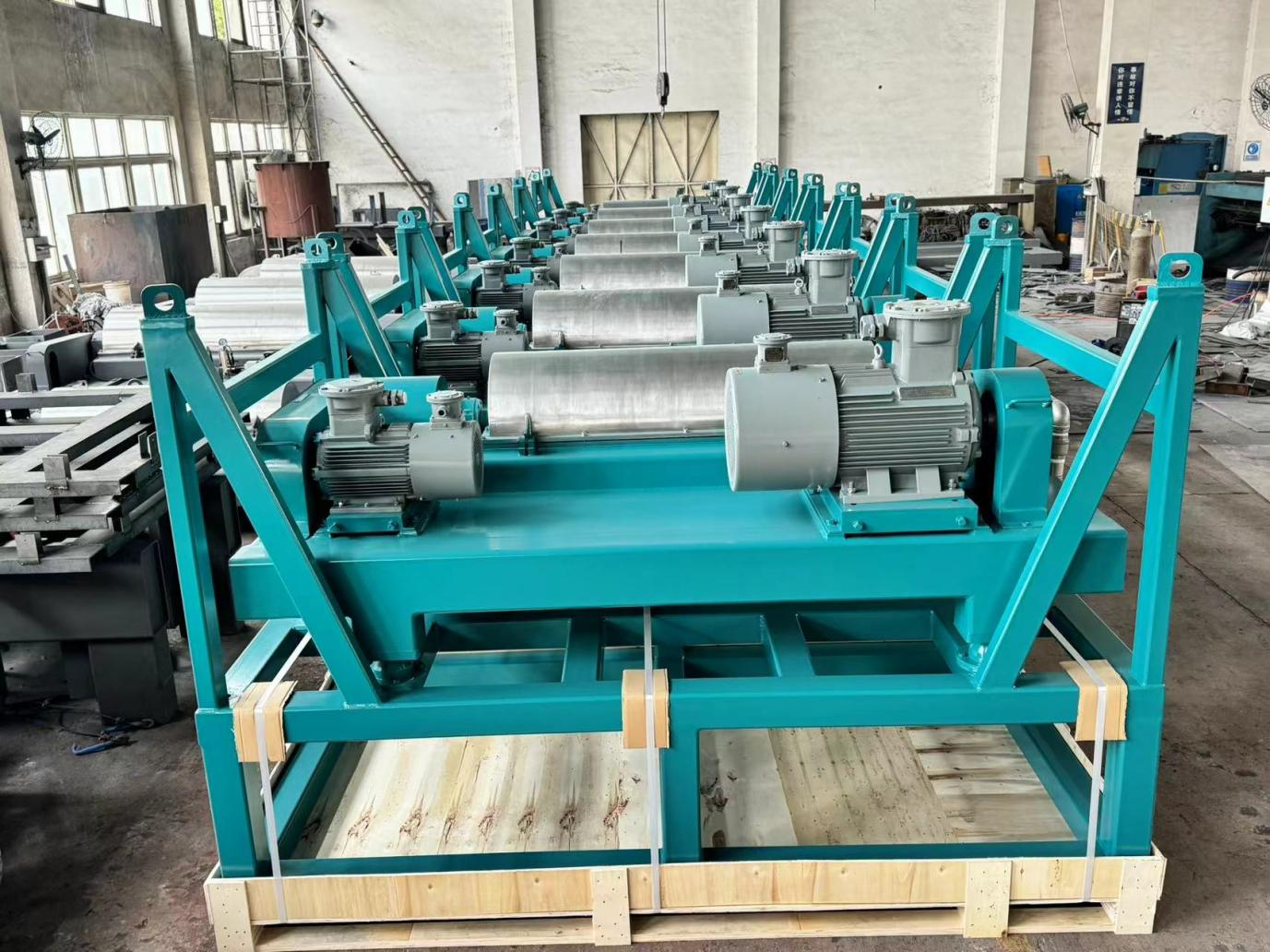 ALT Text: Drilling Mud Centrifuge
2. Specialized Coating Applications
Protective coatings create barriers between corrosive drilling mud and metal substrates, significantly extending component life. Modern coating systems resist abrasion while maintaining chemical protection.
Effective coating options include:
● Ceramic coatings - Excellent wear and corrosion resistance
● Polymer linings - Chemical resistance with flexibility
● Hard chrome plating - Superior wear resistance
● Thermal spray coatings - Customizable properties
3. Composite Material Integration
Fiber-reinforced plastics offer the combination of corrosion resistance and decent mechanical properties of non-critical components. These materials remove the electrochemical corrosion and minimize equipment weight.
Composites made of carbon fiber will give high strength-to-weight ratios and are totally corrosion-proof. These materials may be used in structural materials that do not need metallic characteristics.
4. Ceramic Component Implementation
Silicon carbide ceramics provide excellent wear and corrosion resistance in extreme service conditions. The materials are able to retain sharp edges and dimensional stability when drilling aggressively.
Tungsten carbide is highly wear-resistant and hard enough to be used in high-erosion areas. Although it is prone to some chemical attacks, when applied properly, it increases service life by a considerable margin.
5 Proven Methods to Prevent Corrosion in Centrifuge Systems
Implementing comprehensive control of corrosion strategies requires multiple approaches working together to protect your centrifuge investment effectively.
1. Chemical Treatment Programs
Proper drilling mud chemistry management represents the most cost-effective corrosion control strategy available to drilling operations. You can prevent most corrosion problems through careful additive selection and monitoring.
Essential chemical treatments include:
● Corrosion inhibitors - Create protective films on metal surfaces
● pH control additives - Maintain optimal alkalinity levels
● Oxygen scavengers - Remove dissolved oxygen that drives corrosion
● Biocides - Prevent microbial corrosion in drilling systems
2. Environmental Control Measures
Temperature management reduces corrosion rates by slowing chemical reaction kinetics. Cooling systems maintain optimal operating temperatures that balance performance with corrosion prevention.
Control strategies include:
● Temperature monitoring and cooling systems
● Humidity control during shutdown periods
● Contamination prevention protocols
● Clean operating procedures
3. Regular Maintenance Protocols
Implementing proper SOP for centrifuge maintenance ensures early detection and prevention of corrosion problems. Regular inspections catch issues before they become expensive failures.
Key maintenance activities:
● Visual inspection of all components monthly
● Cleaning procedures after each operation
● Lubrication programs for moving parts
● Non-destructive testing of critical components
4. Monitoring and Early Detection Systems
On-site monitoring systems monitor the rate of corrosion and equipment status continuously. Early warning provides operators with a warning of imminent problems before serious losses are incurred.
The corrosion probes are used to determine real-time corrosion rates under operating conditions. This information is useful to optimize drilling mud treatment chemistry and maintenance schedules to provide maximum protection.
Vibration monitoring identifies the variations in the machine condition that could be evidence of corrosion damage. In trending analysis, gradual degradation precedes catastrophic failure.
5. Cathodic Protection Systems
Large metallic parts have extra corrosion protection offered by electrochemical protection. These systems are effective because they control the electrical surroundings of equipment.
Impressed current systems offer electrochemical protection of large metal parts. Such systems compel the flow of protective current that does not allow corrosion reactions to take place.
Recommended Equipment Solutions
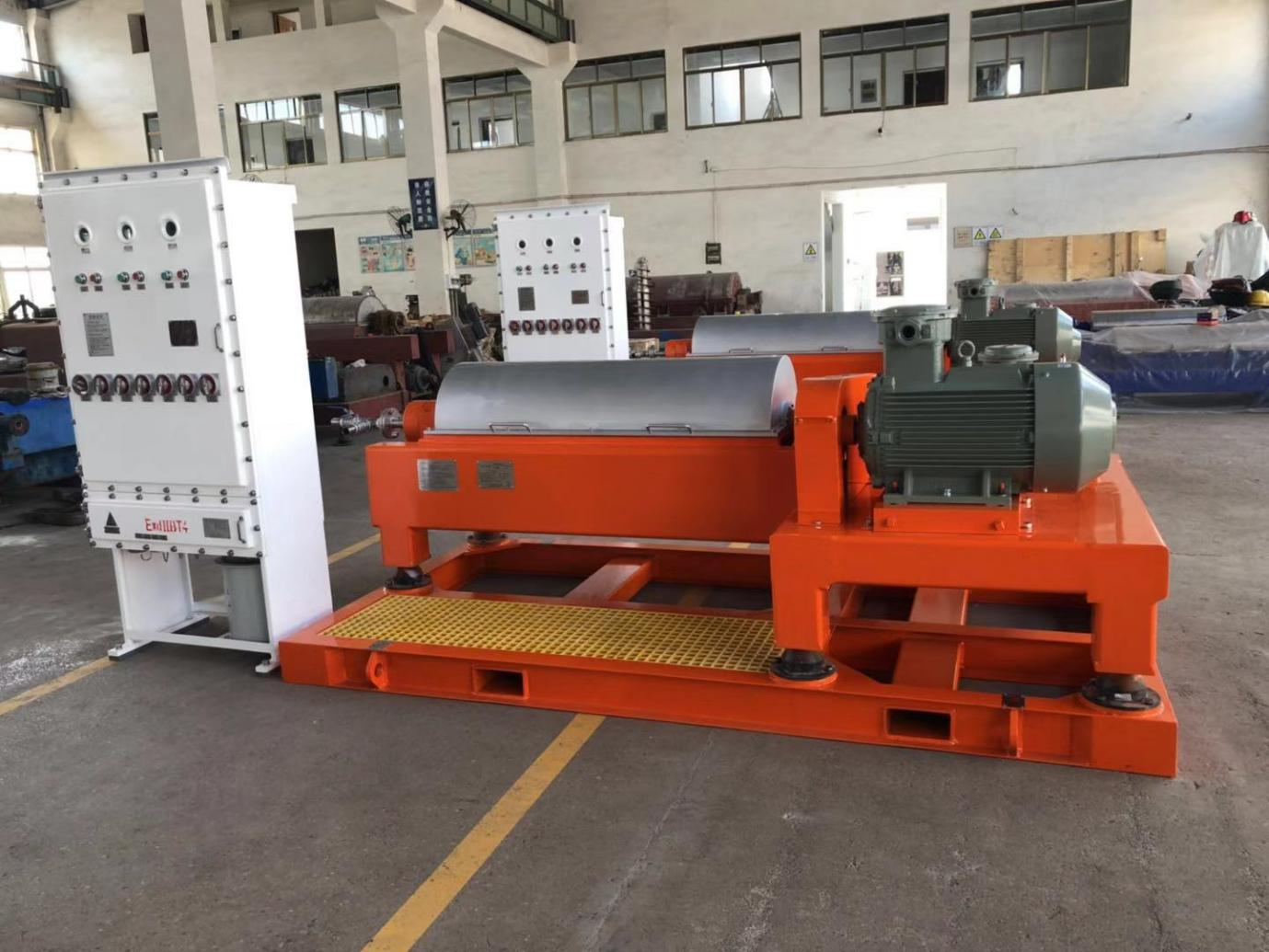
For drilling operations requiring superior corrosion control and reliability, the Shenzhou Large Volume Anti-abrasive Drilling Mud Centrifuge with Tiled Conveyor provides industry-leading performance. This advanced system incorporates proven materials and design features that maximize service life while minimizing maintenance requirements.
The specialized Shenzhou Coconut Oil Decanter Centrifuge demonstrates how proper material selection and engineering design create equipment that withstands aggressive operating conditions. These systems deliver consistent performance while reducing the total cost of ownership through extended service intervals.
Key features of these advanced systems include:
● Superior material construction for corrosion resistance
● Anti-abrasive design elements for extended wear life
● Tiled conveyor technology for improved solids handling
● Professional engineering for demanding drilling applications
Conclusion
Corrosion prevention in drilling mud centrifuge starts with choosing the right materials and using effective protection methods. Understanding how corrosion happens and taking proactive steps can turn your equipment from a constant problem into a reliable asset. Advanced centrifuge systems designed with durable materials and built-in corrosion safeguards make maintenance easier and operations safer. How can the right combination of materials and prevention strategies keep your centrifuge running smoothly? Learn more at LNSZJX Drilling Equipment.
ReviewsNumber of comments: {{ page.total }}
I want to comment?
{{item.nickname ? (item.nickname.slice(0, 2) + '*****') : item.source === 1 ? 'mall buyer' : '--'}}
{{item.comment_time}}
Review in the {{item.country}}
Reviews
Merchant
{{replyItem.nickname ? (replyItem.nickname.slice(0, 2) + '*****') : replyItem.source === 1 ? 'mall buyer' : '--'}}
{{replyItem.parent_nickname ? (replyItem.parent_nickname.slice(0, 2) + '*****') : '--'}}
{{replyItem.is_merchant_reply === 1 ? replyItem.reply_time : replyItem.comment_time}}
Review in the {{replyItem.country}}
Reviews

No customer reviews
Recommended for you
Leave A Message
Welcome all who care engaged in the separation and filtration to work with us,and we are also looking for the qualified world wide agents to provide better service and deep marketing.
Copyright © 2026 Shenzhou Machinery is a core subsidiary of Shenzhou Group | Sitemap