


Table of Contents
decanter centrifuge Supplier & manufacturers | Shenzhou
2025-06-20
×
The decanter centrifuge is a high-efficiency centrifugal separation equipment widely used in chemical, food, environmental protection and other industries. Its main components are as follows:
### **I. Drum System**
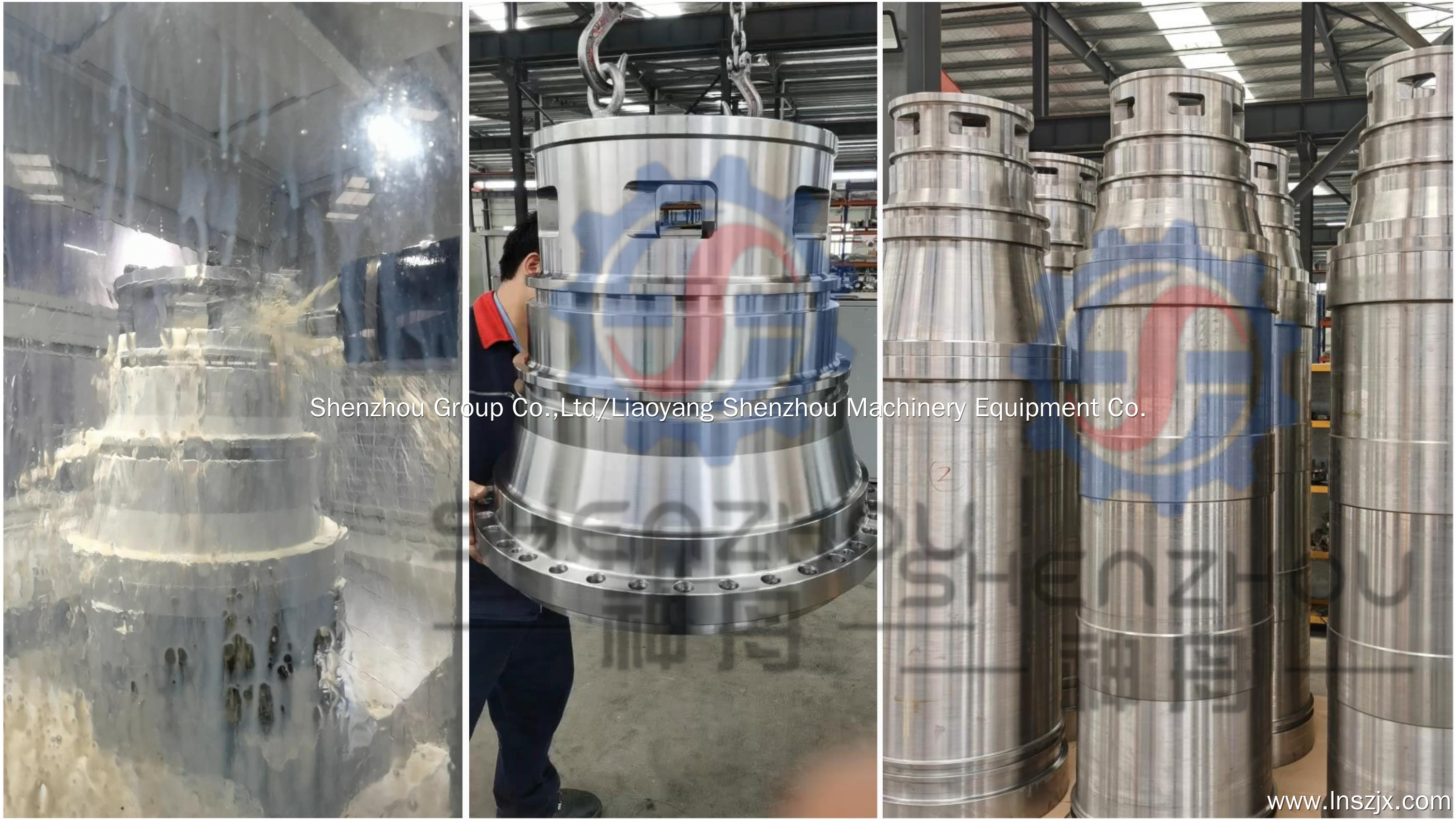
- **Core Structure**: Conical or cylindrical in shape, serving as the key component for the decanter centrifuge to achieve separation.
- **Function**: Generates centrifugal force through high-speed rotation, causing the solid and liquid phases in the material to separate due to density differences.
- **Material**: Typically made of wear-resistant and corrosion-resistant stainless steel (such as 316L) or special alloys to adapt to different material characteristics.
### **II. Screw Conveyor (Screw Pusher)**
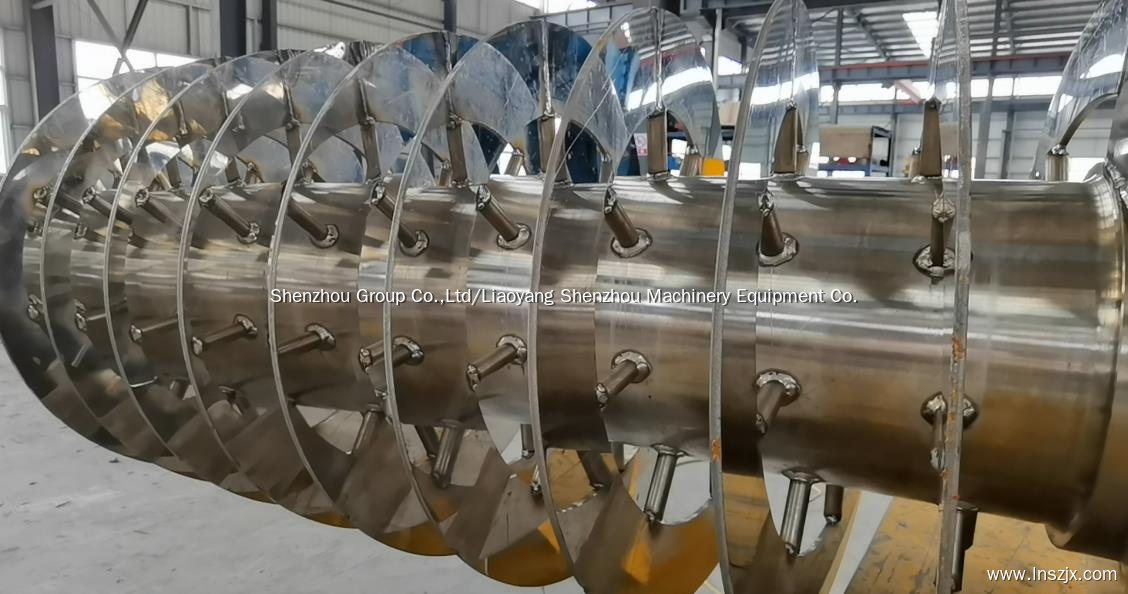
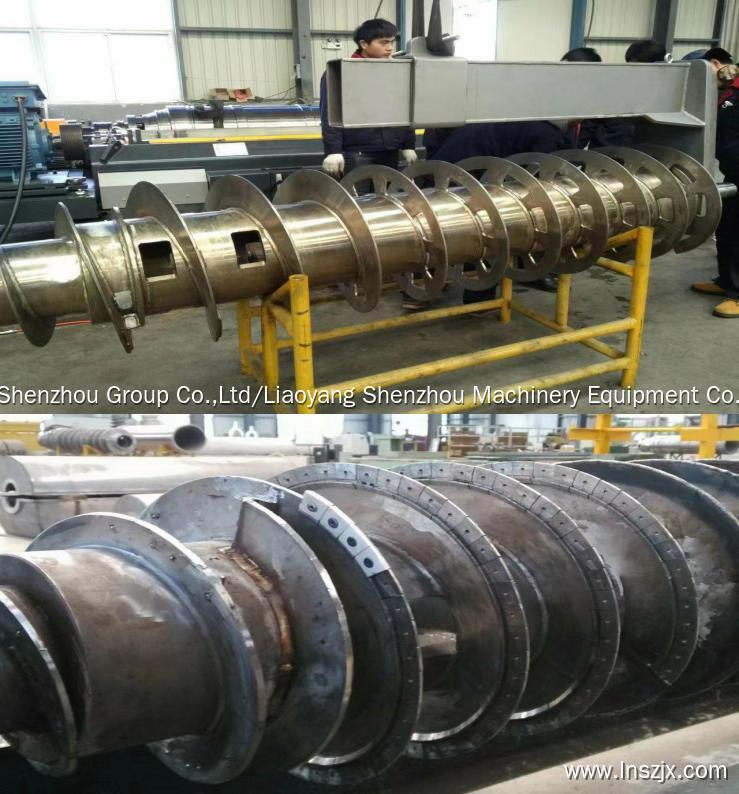
- **Structure**: Located inside the drum, coaxially installed with the drum, and the screw blades extend axially.
- **Function**: Through the speed difference (differential speed) with the drum, the separated solid materials are pushed from the small end (conical end) of the drum to the slag discharge port, while the liquid phase is discharged from the other end (large end).
- **Characteristics**: The pitch and angle of the screw blades are designed according to material characteristics to ensure the efficiency of material pushing and the separation effect.
### **III. Differential Drive System**
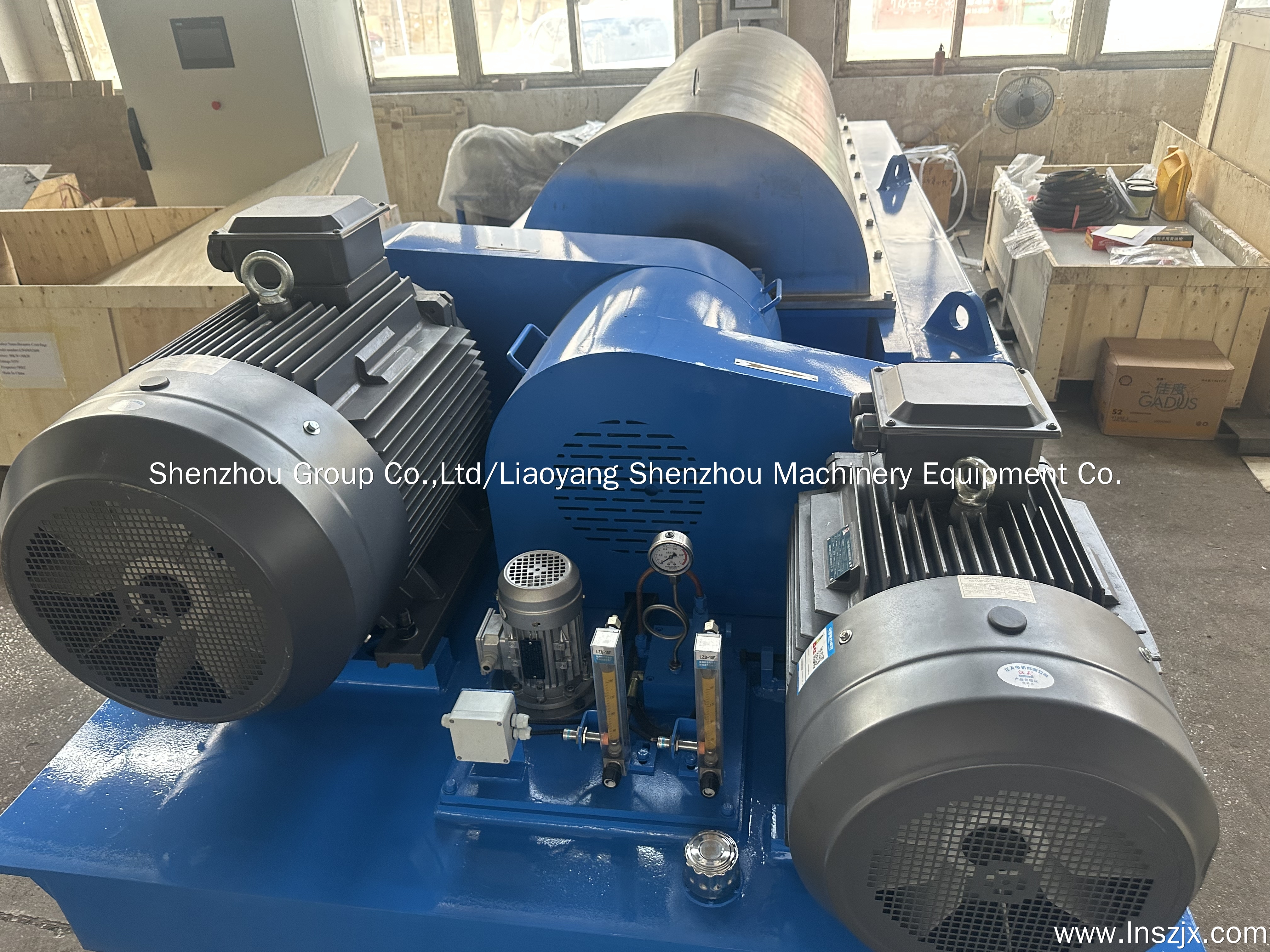
- **Composition**: Including differential, gearbox, motor and transmission components (such as belts, couplings).
- **Function**: Controls the speed difference between the drum and the screw conveyor to ensure the smooth transportation of solid materials. The size of the differential speed can be adjusted by frequency conversion speed regulation or mechanical adjustment devices to meet the separation requirements of different materials.
### **IV. Feeding System**
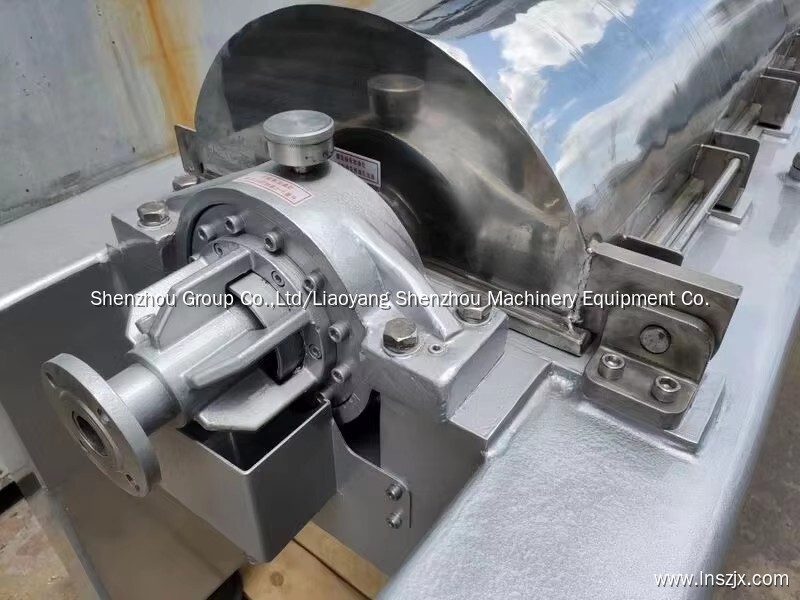
- **Structure**: Including feed pipe and distributor (such as feed cone, cloth hole).
- **Function**: Uniformly introduces the material to be separated into the inside of the drum to avoid the impact of feeding on the separation effect. The design of the distributor needs to ensure that the material forms a stable liquid ring layer in the drum.
### **V. Slag Discharge and Liquid Discharge System**
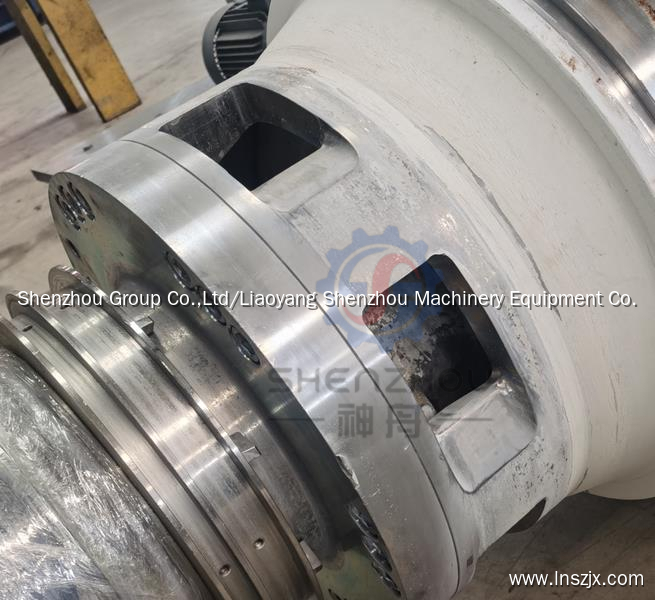
- **Slag Discharge Port**: Located at the conical end of the drum, and the separated solid materials are pushed here by the screw for discharge. Some equipment is equipped with an adjustable slag discharge baffle to control the moisture content of the solid phase.
- **Liquid Discharge Port**: Located at the large end (cylindrical end) of the drum, and the separated liquid phase is discharged through the overflow weir or liquid discharge pipe. The height of the overflow weir can be adjusted to control the thickness of the liquid ring and the separation efficiency.
### **VI. Machine Base and Shell**
- **Machine Base**: Supports the entire equipment to ensure operational stability, and is usually equipped with shock absorption devices (such as springs, rubber pads) to reduce vibration.
- **Shell**: Seals the drum system to prevent material leakage and noise diffusion, while providing safety protection. The shell is provided with observation windows and maintenance ports for convenient equipment maintenance.
### **VII. Control System**
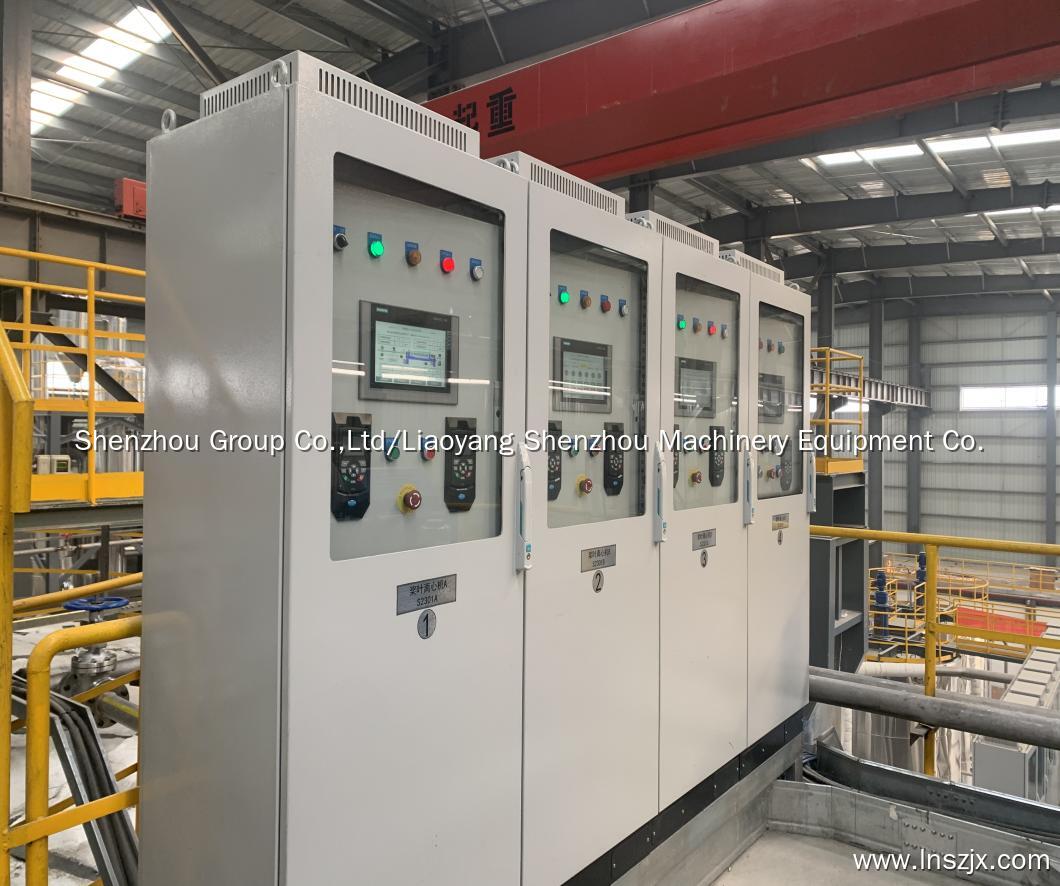
- **Composition**: Including PLC control cabinet, sensors (such as speed sensor, temperature sensor), touch screen, etc.
- **Function**: Real-time monitoring of equipment operation parameters (speed, differential speed, temperature, vibration, etc.), and automatic adjustment according to process requirements to ensure the stable and efficient separation process. Some high-end equipment also has fault warning and remote control functions.
### **VIII. Auxiliary Systems (Optional)**
- **Flushing System**: Used for internal cleaning of the equipment after shutdown to prevent material residue from blocking pipelines or corroding components.
- **Lubrication System**: Automatically provides lubrication for transmission components such as differentials and bearings to extend the service life of the equipment.
- **Cooling System**: When processing high-temperature materials or the equipment runs at high speed for a long time, the temperature of components is controlled by water cooling or air cooling devices.
### **Brief Description of Working Principle**
After the material to be separated enters the drum through the feeding system, under high-speed rotation, the solid particles with higher density are thrown to the inner wall of the drum to form a filter cake, which is pushed to the slag discharge port by the screw conveyor; the liquid phase with lower density forms a liquid ring layer and overflows from the liquid discharge port, so as to realize solid-liquid separation.
Through the synergistic effect of each component, the decanter centrifuge can efficiently process various materials such as suspensions and emulsions, and has the characteristics of high separation efficiency, high degree of automation, and convenient operation and maintenance.
ReviewsNumber of comments: {{ page.total }}
I want to comment?
{{item.nickname ? (item.nickname.slice(0, 2) + '*****') : item.source === 1 ? 'mall buyer' : '--'}}
{{item.comment_time}}
Review in the {{item.country}}
Reviews
Merchant
{{replyItem.nickname ? (replyItem.nickname.slice(0, 2) + '*****') : replyItem.source === 1 ? 'mall buyer' : '--'}}
{{replyItem.parent_nickname ? (replyItem.parent_nickname.slice(0, 2) + '*****') : '--'}}
{{replyItem.is_merchant_reply === 1 ? replyItem.reply_time : replyItem.comment_time}}
Review in the {{replyItem.country}}
Reviews

No customer reviews
Recommended for you
Leave A Message
Welcome all who care engaged in the separation and filtration to work with us,and we are also looking for the qualified world wide agents to provide better service and deep marketing.
Copyright © 2026 Shenzhou Machinery is a core subsidiary of Shenzhou Group | Sitemap