


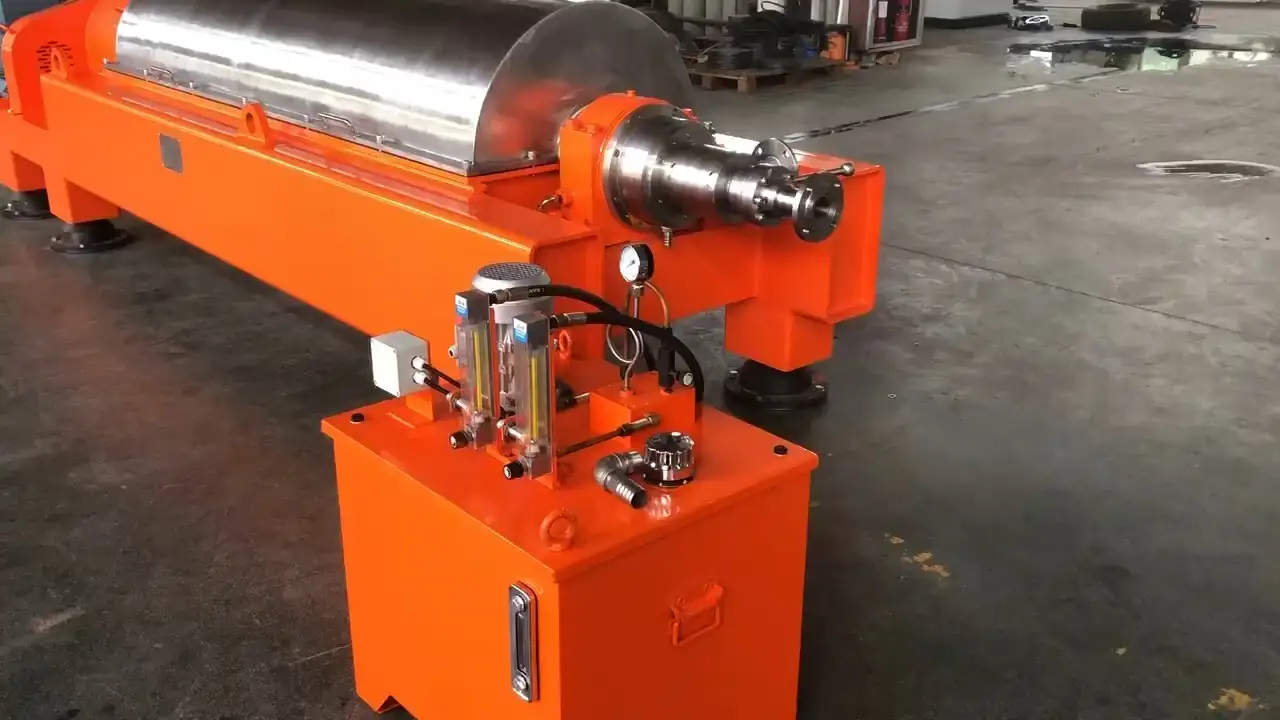
Application of Decanter Centrifuge in Lithium Battery Industry
- Lithium Resource Extraction (Spodumene, Brine & DLE) Used for dewatering spodumene ore slurry and tailings, recycling process water. It concentrates lithium slurry and dewets precipitated lithium carbonate / lithium hydroxide slurry. The overflow liquid is purified to improve lithium recovery rate. Wetted parts can adopt 2205 / 2507 duplex steel to resist alkaline and corrosive slurry. Scroll blades can be treated with tungsten carbide coating or hard alloy inlay against abrasive particles.
- Cathode & Anode Material Production (NCM precursor, LFP, graphite) During the washing process of precursor and LFP synthesis slurry, decanter continuously separates solid powder from washing mother liquor. It removes soluble impurities on powder surface and guarantees material purity, avoiding metal ion contamination of active materials. Fully closed structure reduces loss of valuable powder. 24h continuous operation is available for mass production, and separated mother liquor can be recycled.
- Hydrometallurgical Recycling of Spent Lithium Batteries (Black Mass) After leaching of crushed battery black mass, decanter separates leaching residues from leachate to enrich valuable metals (Li, Ni, Co). Our LWS three-phase decanter can separate organic phase, aqueous phase and solid residue at the same time for solvent recovery.
- Lithium Battery Process Wastewater Treatment As pretreatment equipment for high-suspended wastewater from material production and battery recycling, it removes suspended solids, recovers residual lithium salts and reduces follow-up wastewater treatment load.
Key Equipment Features for Lithium Battery Working Conditions
- Material options: 316L stainless steel, 2205/2507 duplex steel to prevent metal ion dissolution and resist acid & alkali corrosion.
- Wear protection: tungsten carbide coating or hard alloy inlay on scroll blades for abrasive powder.
- Closed sealing structure, optional nitrogen blanketing to avoid material oxidation.
- Siemens PLC & HMI control, with online monitoring of vibration, temperature and current, compatible with SCADA system.
- CIP cleaning design for batch switching and cross-contamination prevention.
Q1: What are the main applications of decanter centrifuges in the lithium battery industry? A: Decanter centrifuges provide continuous solid-liquid separation. They are used for lithium extraction (spodumene, brine and DLE), washing and dewatering of LFP / NCM precursors, separation of black mass leaching residues from spent lithium batteries, and pretreatment of lithium battery process wastewater. Our LWS three-phase decanter can separate organic phase, aqueous phase and solid residue at the same time for solvent recovery.
Q2: Lithium slurry is corrosive. How to select the equipment material? A: 316L stainless steel is used for general working conditions. 2205 / 2507 duplex steel is recommended for alkaline, chloride-containing or highly corrosive slurry to avoid metal ion contamination of lithium battery materials. All wetted parts can be customized.
Q3: Lithium powder is highly abrasive. How to protect the scroll? A: The working surface of scroll blades can adopt HVOF tungsten carbide coating or inlaid hard alloy blocks, which greatly extend service life for abrasive lithium salt, ore slurry and black mass slurry.
Q4: Does the equipment support CIP cleaning? Will cross-contamination between batches occur? A: CIP cleaning is available. The closed structure with integrated cleaning piping facilitates batch switching and reduces cross-contamination risk. SIP steam sterilization is not supported.
Q5: Can it run continuously 24 hours and connect to the factory SCADA system? A: Yes, 24-hour continuous operation is supported. The unit is equipped with Siemens PLC and HMI to monitor vibration, bearing temperature and oil pressure in real time. Reserved communication ports support SCADA integration to meet automatic production requirements of new energy factories.
Q6: Two-phase decanter or LWS three-phase decanter for lithium battery projects? A: Two-phase decanter is used for simple solid-liquid separation such as precursor dewatering, ore slurry dewatering and leaching residue separation. LWS three-phase decanter is chosen when organic phase, aqueous phase and solids coexist for solvent recovery. We select the model according to your feed conditions.
Q7: What is the equipment capacity range? A: Our product portfolio covers lab, pilot and industrial-scale units. The processing capacity ranges from several hundred L/h up to dozens of m³/h. Model selection depends on solid content and sedimentation characteristics of feed slurry.
Q8: What is the lead time? Do you provide on-site commissioning and training? A: Lead time for standard models is about 3–4 months. Lead time for customized units will be assessed separately. We provide on-site installation supervision, commissioning, operator training, long-term spare parts supply and remote technical support.
Q9: What is the sealing solution? Will powder leak out? A: Combined sealing system with mechanical seals and framework oil seals. Nitrogen blanketing closed structure is optional to prevent powder escape and material oxidation, minimizing loss of valuable lithium powder.